








Apple has published the advertising policy that will govern ads in Apple Maps, ahead of a launch it has dated only as this summer. The rules took effect on July 14, 2026, and cover the U.S. and Canada.
Apple has been building toward Maps advertising for over a year. In March, the company confirmed paid ads in Maps as part of Apple Business, with a summer window for the U.S. and Canada. In October last year, the same plan was still a reported internal discussion rather than a committed product.
A live eligibility policy is a different order of signal, since advertising rules get written when there is an auction close enough to need them. The policy also gives local businesses their first concrete answer on who qualifies, months before Apple has named a launch date.
How Maps Ads Will Appear
Apple Maps ads promote physical business locations rather than App Store listings, and they are managed through the Apple Business platform rather than the Apple Ads interface that App Store advertisers already use. According to Apple's Maps advertising page, ads reach people while they search for nearby businesses, and viewers can call the business, request directions, or place an order from the listing. Apple has previewed two formats: a promoted pin marked with a blue ring, and a labeled entry in the Suggested Places list.
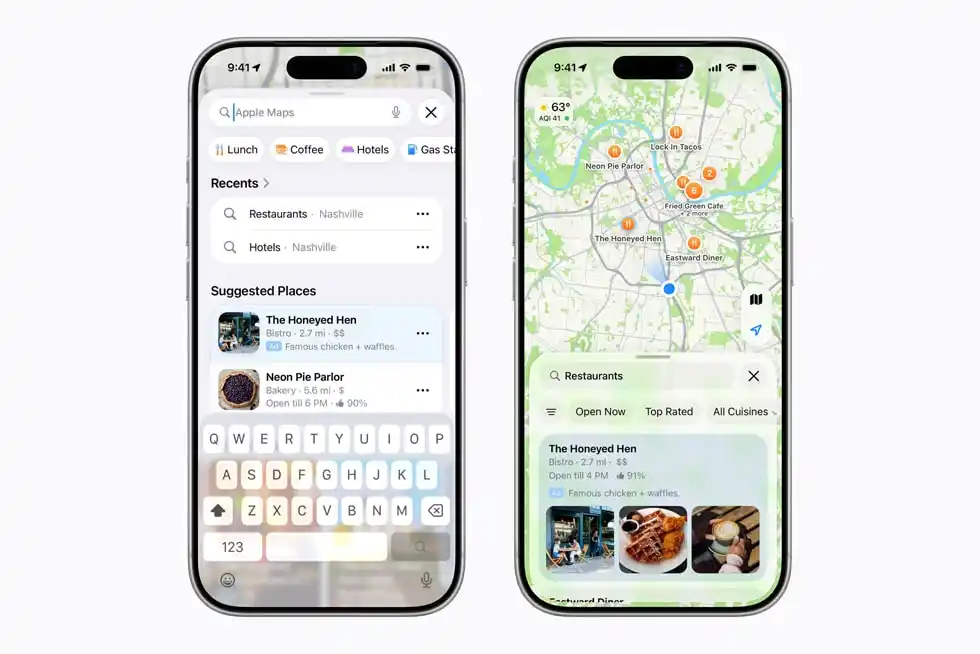
Apple says advertisers control their spending and can start or stop campaigns at any time. It has not published details on bidding, campaign structure, reporting, or optimization controls. To be eligible, a business must claim its location, and Apple recommends uploading accurate photos.
The company also says ad interactions and location activity are not associated with a user's Apple Account, that personal data stays on the device, and that age and gender are not used to target ads on Maps.
Who the Policy Shuts Out
The Maps section of Apple's advertising policy names plumbing, electrical, locksmith, HVAC, pest control, roofing, and general contracting as prohibited categories. The wording covers home services "including but not limited to" those seven, so the list is not a closed set and other trades could fall under the same rule.
Two further categories are barred outright: bail bond and surety bond services tied to criminal pretrial release, and ATMs for cryptocurrencies. Medical services sit in a separate tier and will be evaluated on a case-by-case basis.
Apple has not explained the reasoning. The excluded trades do share a trait. They travel to the customer rather than operate a location the customer visits, and they typically require licensing that varies by state, province, and municipality.
Google serves the categories Apple is excluding. Its Local Services Ads product covers plumbers, electricians, roofers, pest control companies, and HVAC providers on a pay-per-lead basis, gated behind business registration, license, and insurance checks. Google also lets service businesses reach Maps users through Search and Performance Max campaigns using location assets.
What It Means for Local Advertisers
Home services operators now know they are out at launch, which takes Apple off local media plans that Google Local Services Ads currently anchors. For everyone else, the preparation step has not changed. Claiming and verifying a Maps location is the gate to the auction, and that process is open now.
Budget planning is the harder part, since Apple has published eligibility without publishing pricing, inventory, or a firm launch date.
Recap
What has Apple published about Apple Maps ads?

Apple has released the advertising policy that will govern its Apple Maps ads product. The rules took effect on July 14, 2026, ahead of a launch Apple has dated only as this summer in the U.S. and Canada, and they set out which business categories are eligible to advertise.
How will ads on Apple Maps work?
Maps ads promote physical business locations and are managed through the Apple Business platform rather than the Apple Ads interface used for App Store campaigns. Apple has previewed a promoted pin marked with a blue ring and a labeled entry in the Suggested Places list. Advertisers must claim their business location to be eligible.
Which businesses cannot advertise on Apple Maps?
The policy prohibits home services, naming plumbing, electrical, locksmith, HVAC, pest control, roofing, and general contracting. Bail bond services and cryptocurrency ATMs are also prohibited, and medical services are evaluated case by case. Apple's wording covers home services broadly, so adjacent trades should not assume the seven named categories are the full list.