






Apple has rebuilt Siri from the ground up as Siri AI. The new assistant, introduced at WWDC 2026, ships the personal-context features Apple first demoed at WWDC 2024 and formally delayed in March 2025.
The launch closes a 15-month gap between promise and delivery. Apple first showed the "more personal Siri" at WWDC 2024 and built much of the iPhone 16 launch marketing around it, then in March 2025 confirmed the features would slip while Mike Rockwell's team rebuilt the underlying architecture on a unified LLM-based stack. In December 2025, Apple settled a $250 million class action filed by iPhone 16 buyers over the un-shipped features. In April, The Keyword previewed the rebuild ahead of the keynote.
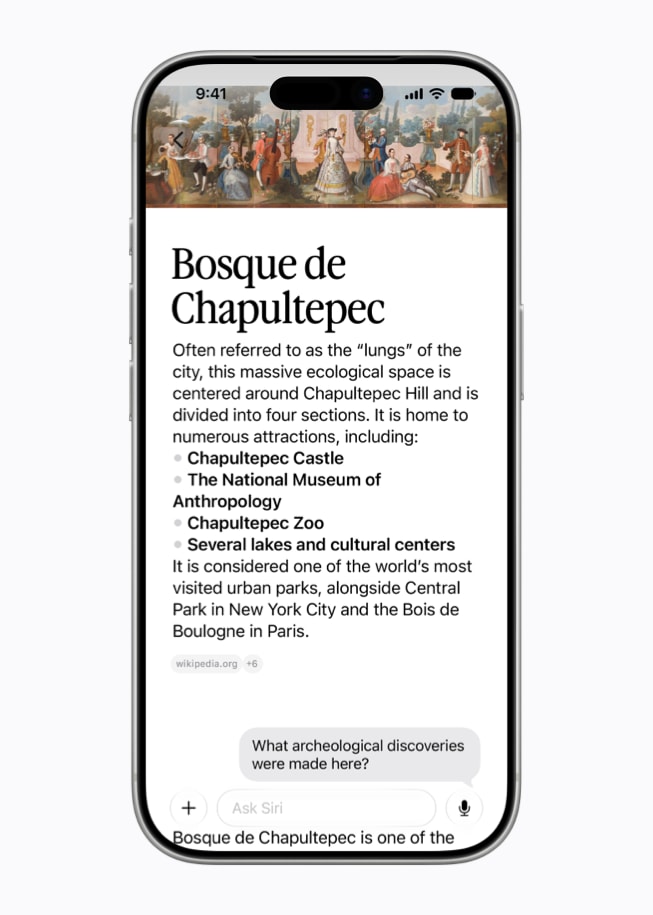
Apple says Siri AI brings new features together in a new assistant that can access personal information across apps, understand what is on a user's screen, and carry out tasks involving multiple applications. "Today we're taking a big step forward," Craig Federighi, Apple's SVP for software design, said at the WWDC. The new Siri AI is powered by Apple Intelligence.
What Siri AI Can Do
Work With Personal Information Across Apps
Siri AI draws on personal context to search across a user's messages, emails, and photos, surfacing specific items like a restaurant recommendation a friend texted or a hotel confirmation buried in an old email. Apple says personal-context understanding extends to third-party apps when developers integrate with Spotlight.
The company claims the assistant can pull together information from different sources before responding. In practice, this means Siri is moving beyond basic voice commands and into a system that can search across a user's digital activity.
Siri AI Can Understand What's On A User's Screen
The assistant adds onscreen awareness, answering questions about whatever is currently displayed, and can pull up-to-date information from the web on virtually any topic. Users can extend almost any response into a back-and-forth conversation with follow-up questions. Systemwide app actions let Siri draft emails, edit and share photos, and add items across apps without leaving the conversation.
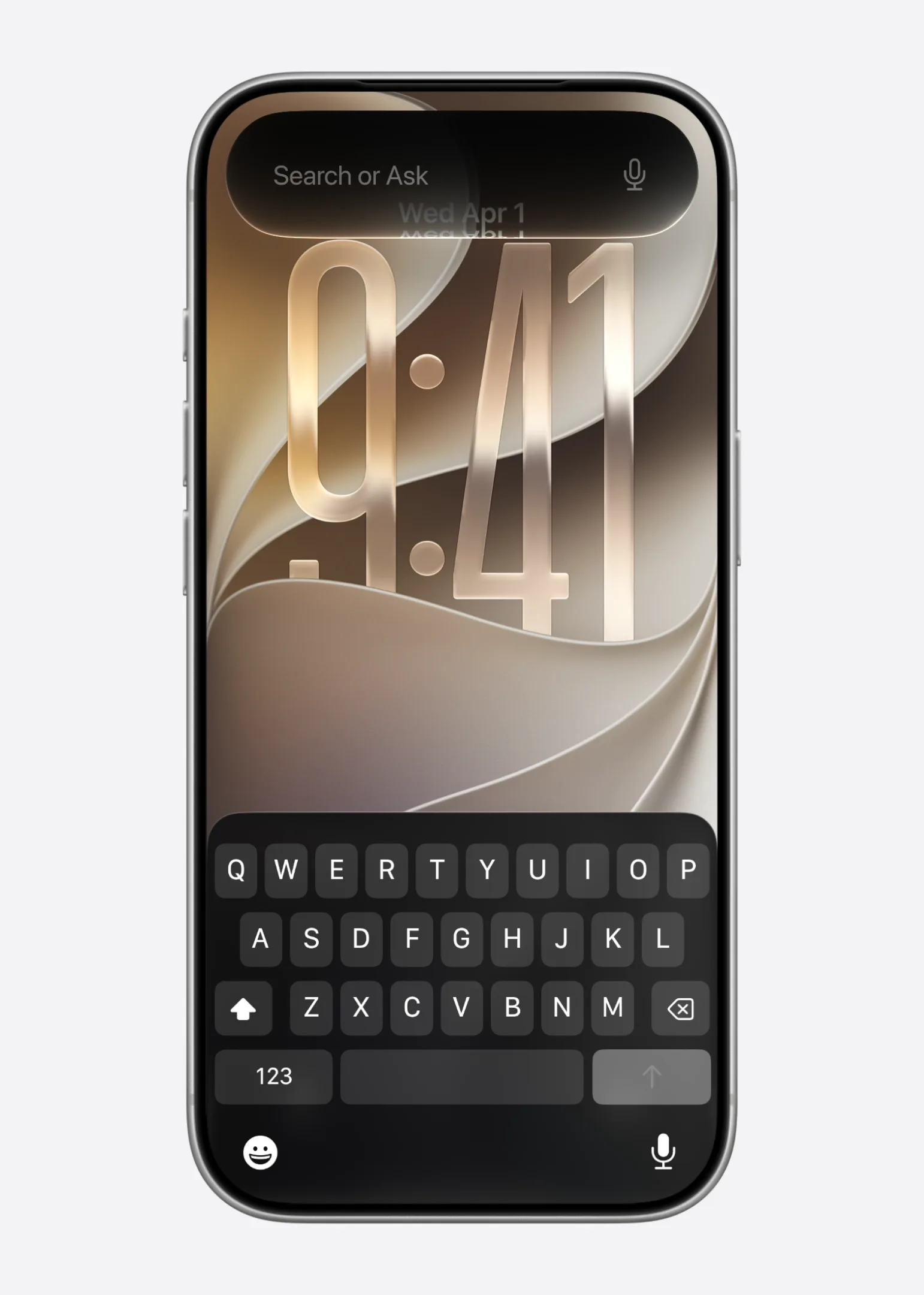
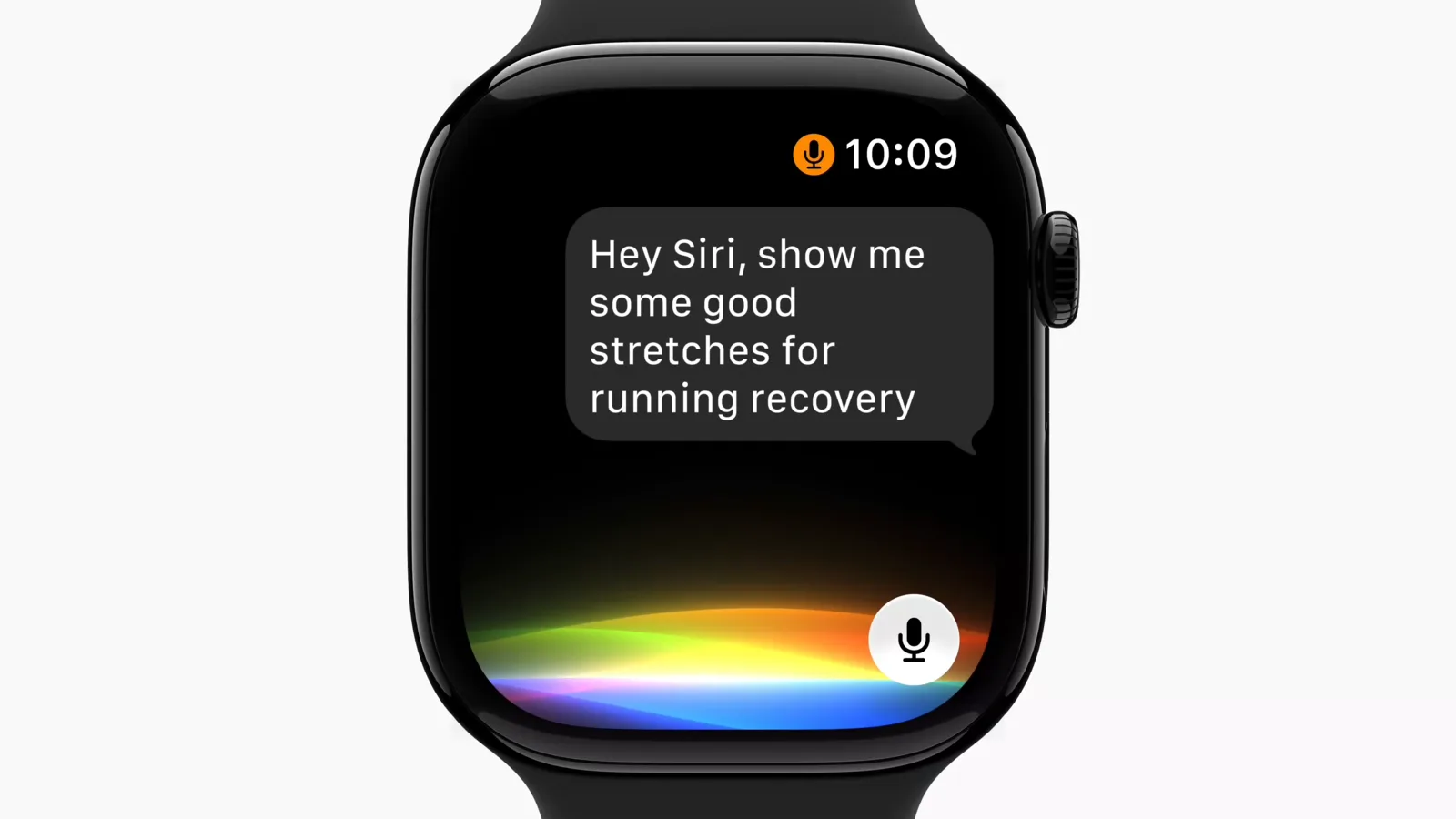
Invocation paths expand beyond "Hey Siri." On iPhone, users can swipe down from the Dynamic Island to start a conversation. On iPad and Mac, Siri AI sits inside Spotlight and inside systemwide context menus, where a control-click adds an "Ask Siri" option for images, files, and text. On Apple Vision Pro, users can place a 3D Siri visualization anywhere in space and start a conversation by looking at it. Apple Watch surfaces a Smart Stack suggestion to continue recent conversations from the wrist.
The Assistant Can Complete Tasks Across Multiple Apps
Apple says Siri AI is also designed to carry out actions that involve more than one application. Previously, Siri interactions were often limited to a single request. Users could ask the assistant to send a message, open an app, or create a reminder, but more complex workflows generally required manual steps.
With Siri AI, Apple claims users can ask the assistant to retrieve information from one app and use it in another. Siri AI can draft emails, locate files, share content, edit photos, and complete requests that involve information from multiple sources.
Siri AI is intended to function as a task-completion system that can work across Apple's software ecosystem.
Visual Intelligence Expands Beyond iPhone
Visual Intelligence, previously iPhone-only, now extends to iPad, Mac, and Apple Vision Pro for the first time. On iPhone, the feature lives inside the Camera app as a new "Siri mode." Users tap the shutter and Siri sees what they see, with new actions including splitting a bill via Apple Cash and getting nutritional insights about a plate of food. On iPad, Visual Intelligence integrates into the screenshot experience.

On Mac, a dedicated keyboard shortcut lets users select something on screen and type directly to Siri. On Apple Vision Pro, users can ask Siri about app-window content or physical objects in their environment just by looking at them.
A Dedicated Siri App and Writing Tools
For the first time, Siri has a standalone app rather than only a system overlay. The app uses iCloud to privately sync conversation history across iPhone, iPad, Mac, Apple Watch, and Apple Vision Pro. Two months ago, The Keyword reported that Apple was testing a standalone Siri app ahead of the iOS 27 cycle; Monday's announcement is the formal launch of that product.
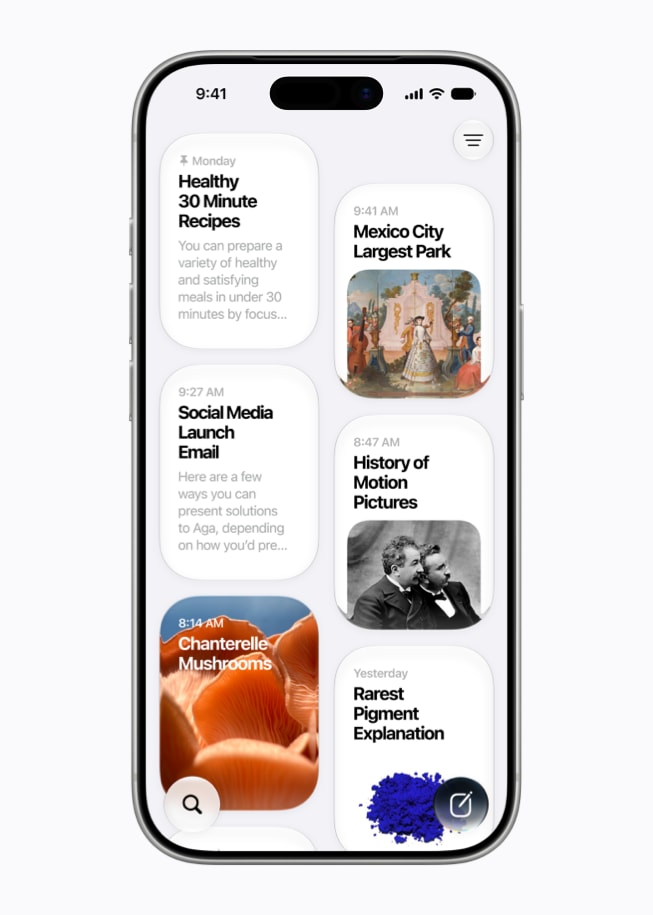
Integrated Writing Tools let users describe what they want and have Siri generate a draft, then refine it on instruction. In Mail and Messages, Siri can reflect how a user typically communicates with each recipient, including punctuation and tone, so an email to a manager populates as short bullet points if that matches the user's pattern.
Systemwide dictation ships with automatic capitalization, punctuation, and formatting, and Apple has added more expressive voices with user-adjustable pace, gated to devices that support its most advanced on-device model.
The Architecture Apple Won't Fully Name
Siri AI runs on what Apple calls "the next generation of Apple Foundation Models," with on-device processing for personal data and server-side processing routed through Private Cloud Compute. Apple says that when Private Cloud Compute handles a request, personal data is not stored or made accessible to Apple or anyone else, and that outside experts can verify this at any time. A system orchestrator routes between on-device capabilities, such as the Spotlight index and the App Toolbox, and cloud-side capabilities.
What Apple did not name is the cloud model. TechCrunch, Bloomberg, and Tom's Guide have reported that Siri AI's cloud intelligence runs on a custom Apple-tuned Google Gemini model under a multi-year licensing arrangement, with reported figures around $1 billion per year and roughly 1.2 trillion parameters. Apple's press release names neither Gemini nor any third-party model. A report in March said that Apple was opening Siri to Gemini and Claude. However, the company has not publicly confirmed which model is in the production stack.
Availability and Regional Gaps
Developer testing begins today through the Apple Developer Program across iOS 27, iPadOS 27, macOS 27, and visionOS 27. Apple Watch developer testing arrives in a future watchOS 27 beta. The user beta is scheduled for later this year in English first, with more languages to follow.
Apple Intelligence supports English, Danish, Dutch, French, German, Italian, Norwegian, Portuguese, Spanish, Swedish, Turkish, Vietnamese, Chinese (simplified), Chinese (traditional), Japanese, and Korean.
Supported devices include iPhone 16 or later, iPhone 15 Pro and 15 Pro Max, iPad mini (A17 Pro), MacBook Neo (A18 Pro), iPad with M1 or later, Mac with M1 or later, Apple Vision Pro, Apple Watch Series 9 or later, Apple Watch Ultra 2 or later, and Apple Watch SE 3 paired with an Apple Intelligence-enabled iPhone.
Regional carve-outs leave two of Apple's largest markets out at launch. Mac, Apple Watch, and Apple Vision Pro users in the EU will get Siri AI when set to a supported language, but iOS and iPadOS users in the EU will not, with Apple citing work to find "a path forward that preserves its users' privacy and security" under Digital Markets Act compliance.
Siri AI and the broader Apple Intelligence features will not be available in China while Apple works through regulatory requirements.
Recap
What is Apple's Siri AI?

Siri AI is a ground-up rebuild of Apple's voice assistant, powered by the next generation of Apple Intelligence. It adds personal-context understanding, broad world knowledge from the web, onscreen awareness, expanded Visual Intelligence, integrated Writing Tools, and a dedicated standalone app that syncs conversation history across devices via iCloud.
How is Siri AI different from the previous version of Siri?
Siri AI can search across a user's messages, emails, and photos to surface personal context such as a hotel confirmation number or a restaurant recommendation. It can pull up-to-date information from the web on virtually any topic, answer questions about whatever is on the screen, and take action across apps to draft emails or edit and share photos. Visual Intelligence, previously iPhone-only, now extends to iPad, Mac, and Apple Vision Pro.
When and where will Siri AI be available?
Developer testing begins today across iOS 27, iPadOS 27, macOS 27, and visionOS 27, with watchOS 27 to follow in a later beta. A user beta is scheduled for later this year in English first, with more languages to follow. iOS and iPadOS users in the EU will not receive Siri AI at launch while Apple works through Digital Markets Act compliance, and Siri AI will not be available in China while Apple works through regulatory requirements.