








Google has introduced a self-service onboarding guide for its Universal Commerce Protocol inside Merchant Center. This marks the first time merchants can directly integrate with the same checkout system used in AI Mode and Gemini shopping. According to Google, the Merchant Center onboarding experience will roll out gradually in the U.S. in the coming months.
How the Onboarding Process Works
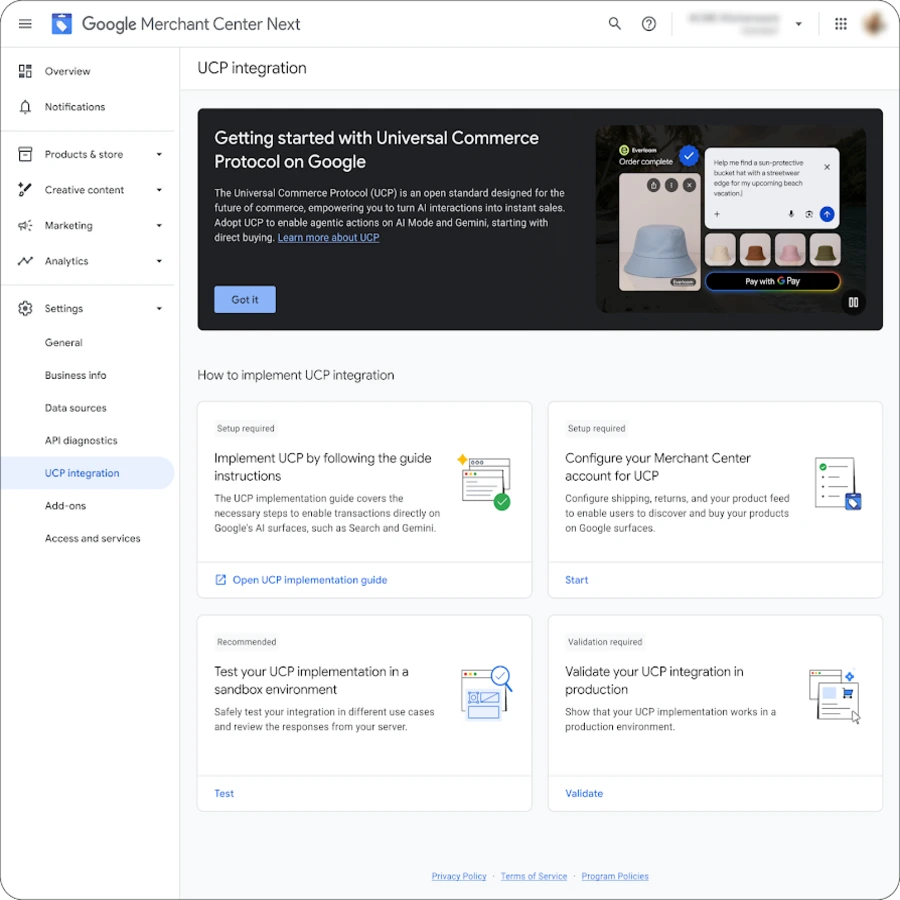
The guide provides a step-by-step path through UCP profile configuration, identity linking, and checkout API implementation. Google says merchants may see the UCP integration tab in their Merchant Center account as the onboarding experience rolls out.
According to the guide, merchants are required to complete the technical implementation outlined in the UCP developer guide and fill out an interest form. Once this is done, they will be notified when they can access the onboarding experience in Merchant Center. This includes a sandbox environment where merchants can test their UCP setup before going live.
Merchants who gain access can validate their UCP profile, identity linking, and native checkout APIs in the sandbox. Merchant Center will also surface alerts about required updates to feed attributes, returns policies, and account settings, meaning compliance is being actively monitored rather than self-reported.
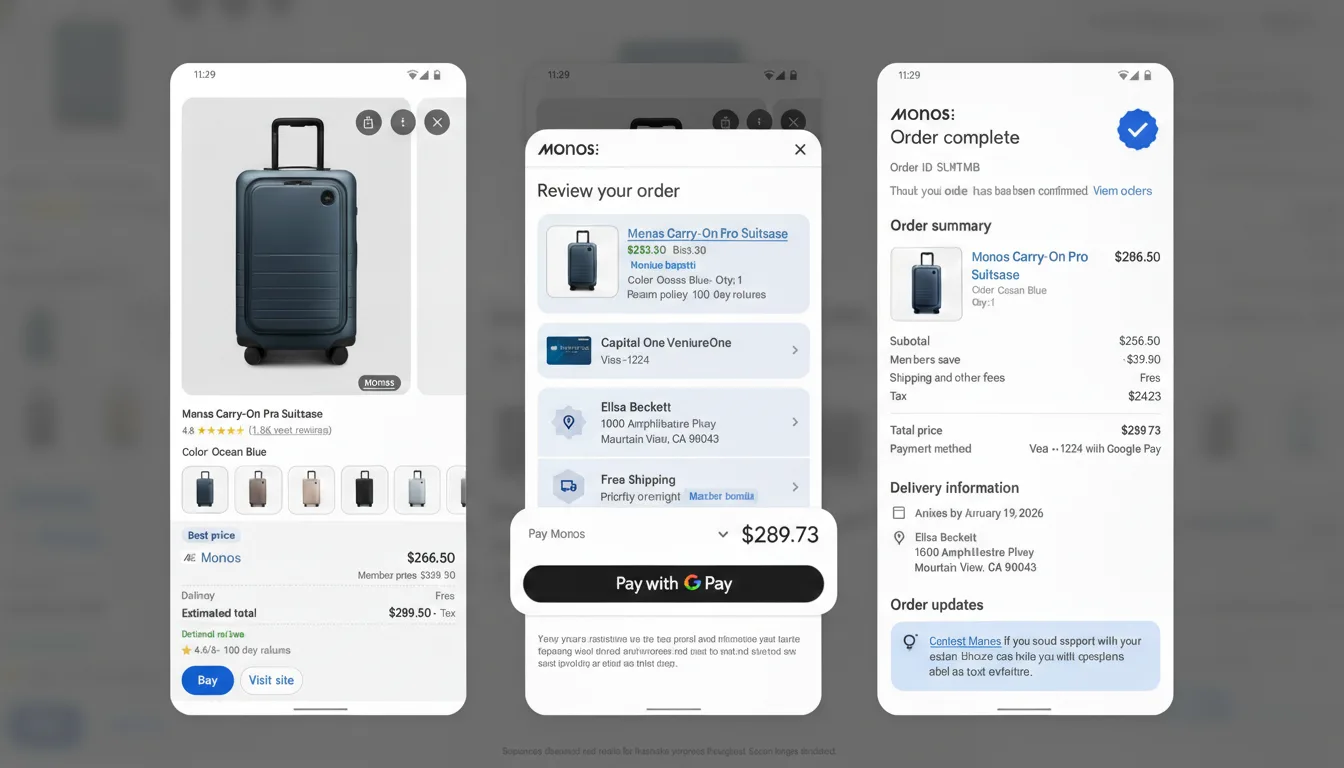
Since Google rolled out UCP-powered checkout inside AI Mode and Gemini, the protocol has added multi-item cart functionality from a single retailer, real-time catalog access for live inventory and pricing, and identity linking that surfaces loyalty benefits across platforms. These capabilities expand what AI agents can execute on behalf of shoppers within Google surfaces.
Universal Commerce Protocol and How It Works for Merchants
UCP is an open standard designed to enable AI systems to interact directly with merchant commerce systems. UCP provides a shared structure for communication between AI agents and retailers. It defines how key commerce data such as product listings, pricing, availability, checkout rules, and fulfillment are represented in a consistent format, reducing the need for separate custom integrations across platforms.
Google describes UCP as a way for merchants to expose commerce data so that AI-driven surfaces like Search or Gemini can support both product discovery and transaction-related actions using a common framework across different retailers.
UCP functions as a structured interface between a merchant’s backend systems and AI-powered shopping environments. For instance, a merchant connects systems such as product catalogs, pricing, inventory, and order management to a UCP-compatible format. This information is then made accessible for AI systems to interpret and act on.
Once integrated, merchants define the actions AI systems can perform, such as:
- Displaying product information from the catalog
- Checking real-time availability
- Accessing pricing and shipping details
- Initiating a checkout or purchase flow
What Merchants Must Prepare
Feed quality is now a competitive differentiator for AI surfaces. UCP agents pull real-time catalog data; stale pricing or out-of-stock items result in failed transactions and lower quality scores. Returns and shipping policies must be fully configured in Merchant Center before gaining UCP access.
The core technical requirement is implementing UCP checkout APIs, either directly or through a commerce platform. This is a meaningful development lift that requires dedicated resources. Several platforms are already moving toward integration. Commerce Inc, Salesforce, and Stripe have committed to near-term implementations, expanding the integration surface beyond Google's own tools. Merchants using other platforms should confirm their provider's UCP integration timeline directly rather than assuming automatic support.
Merchants with loyalty programs should prioritize identity linking, which surfaces member pricing and benefits inside AI shopping conversations. This functions as a retention lever within a new distribution channel, not an optional feature.
Why Integration Timing Matters
Products not enabled for UCP will not appear in AI Mode checkout or Gemini shopping experiences, a growing share of high-intent discovery traffic. Google has been expanding the protocol's requirements and infrastructure steadily since launch, and the competitive dynamics of agentic commerce make early integration a visibility advantage rather than a future consideration.
No separate campaign setup is required for UCP presence. Merchants running Google Shopping or Performance Max campaigns should view UCP as a complementary channel, but product feed quality and checkout readiness directly determine eligibility. Attribution and reporting for UCP transactions are still being developed, with a dedicated UCP integration tab expected in Merchant Center in coming months.
Technical Infrastructure
UCP supports multiple transport methods, including REST APIs, Agent2Agent, and Model Context Protocol. On payments, it works with providers such as Google Pay and Shop Pay, using cryptographic consent verification. Google notes that merchants remain the merchant of record and retain control over customer relationships and post-purchase experiences.
The protocol was developed with Shopify, Etsy, Wayfair, Target, and Walmart, endorsed by more than 20 global partners. Integration is currently U.S.-only with gradual expansion planned.

What Roger Dunn thinks brands should do as agentic commerce reshapes product visibility on Google.
“For brands that sell through retailers: The Catalog endpoint means your product data quality just became operationally urgent, not strategically important. When an agent can query a retailer's catalog in real time and present live pricing and availability, the products with the richest structured data, most accurate inventory signals, and clearest variant information will be surfaced first.
Audit your data through the lens of what an agent needs to recommend you confidently: not marketing copy, but machine-readable precision about what's in stock, in what sizes, at what price, right now.”

Recap
How do merchants start integrating with Google's Universal Commerce Protocol?

Google has published a self-service onboarding guide in Merchant Center that walks merchants through UCP profile configuration, identity linking, and checkout API implementation. A sandbox environment is available for testing before going live. Merchant Center will alert merchants about required updates to feed attributes, returns policies, and account settings.
Do merchants need separate campaigns for UCP?
No separate campaign setup is required. Merchants running Google Shopping or Performance Max campaigns are potentially eligible, but product feed quality and checkout readiness determine whether products appear in AI Mode and Gemini shopping experiences. Checkout API implementation is a separate technical requirement beyond standard campaign management.
What commerce platforms support UCP integration?
Google developed UCP with Shopify, Etsy, Wayfair, Target, and Walmart, with more than 20 global partners endorsing the standard. Commerce Inc, Salesforce, and Stripe have committed to near-term implementations. Merchants using other platforms should confirm their provider's UCP integration timeline directly.