







Google is expanding Search Live, its real-time voice and camera search feature, to more than 200 countries and territories. The feature sits inside AI Mode in the Google app and was previously available only in the U.S. and India since its initial launch in July last year.
What Powers the Global Rollout
The expansion runs on Gemini 3.1 Flash Live, a new audio and voice model that Google describes as inherently multilingual. Rather than translating from English, the model is designed to understand and respond in a user's preferred language natively. This replaces the English-only constraint that limited Search Live's earlier releases and opens voice search to markets where English is not the dominant language.
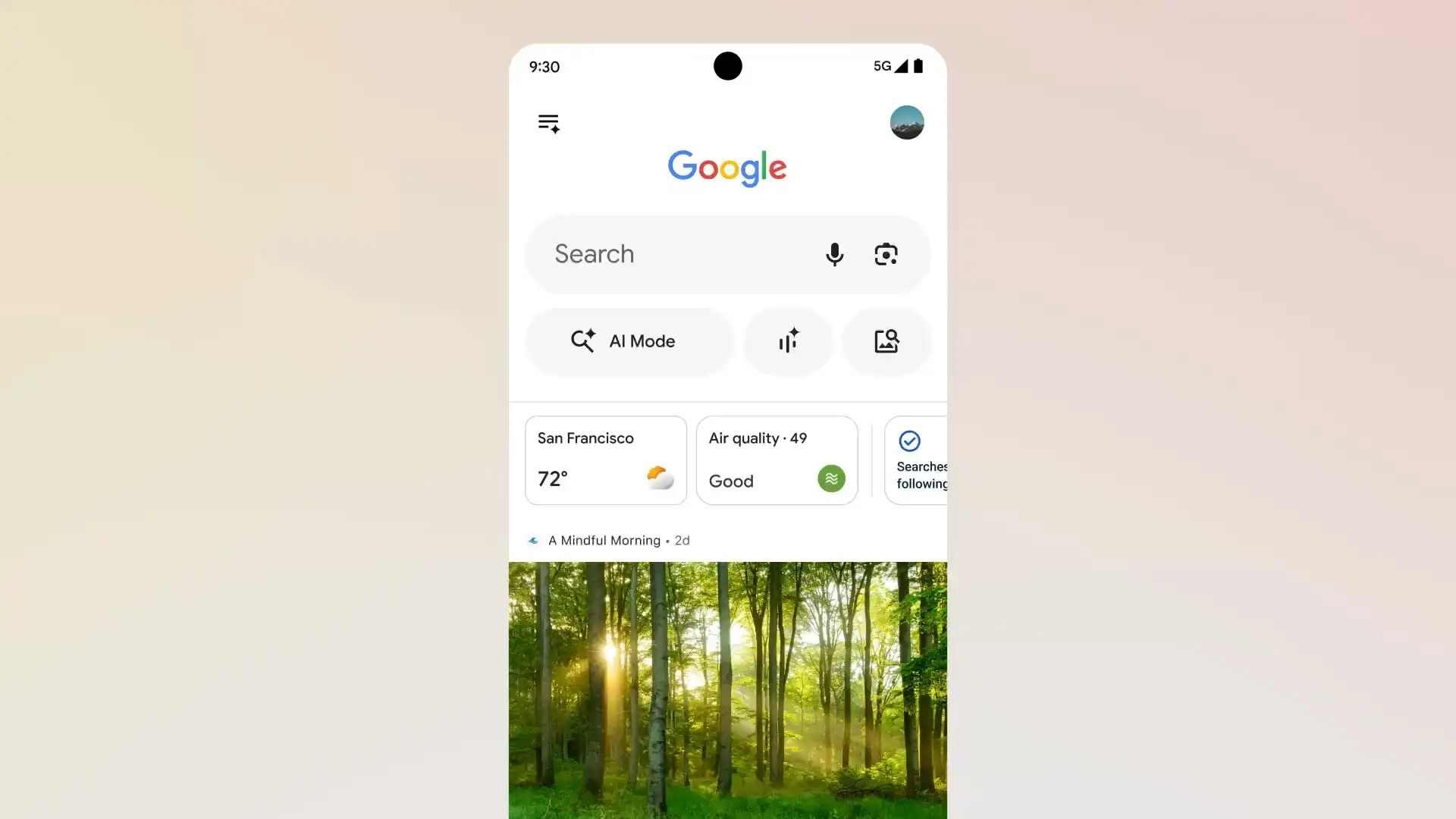
Search Live is now available everywhere AI Mode is active. Users across Europe, Latin America, Southeast Asia, Africa, and the Middle East can access the feature for the first time.
How Search Live Works
Users open the Google app on Android or iOS and tap the "Live" icon beneath the search bar. They can ask questions aloud and receive audio responses in real time. The feature supports multi-turn conversations; users can ask follow-ups, and Search will reference previous questions for context.
Camera integration is built in. Users can share their phone's camera feed to give Search visual context, similar to Google Lens but within a live conversational flow. If someone is already using Lens, they can switch to Search Live and begin a voice conversation about what is in frame. Search Live also surfaces web links alongside audio responses, giving users a path to deeper information.
Google first introduced Search Live as a voice input feature in AI Mode, then expanded it with camera input for U.S. users. Today's update brings both capabilities to its full global footprint.
Why the Timing Matters
Voice queries now account for 27% of all searches globally, with more than 8.4 billion voice-enabled devices in use. Search Live positions Google to capture that shift directly inside its core search product rather than ceding ground to standalone voice assistants or competing AI tools.
ChatGPT's Advanced Voice Mode and Perplexity's voice search have been drawing users toward conversational, voice-first experiences. Search Live combines voice, camera, and Google's web index in a single interface. The 200-country rollout on a multilingual model is a distribution advantage that neither competitor currently matches.
What This Means for Marketers
Voice and visual search at global scale changes how users discover information. Queries spoken aloud tend to be longer and more conversational than typed searches, which could shift keyword strategy toward natural-language phrases. Marketers should consider how content performs when read back as an audio response rather than displayed as a search snippet.
The camera integration creates new surface area for visual search. Brands with physical products should ensure their product imagery and metadata are optimized for Google Lens and visual recognition within Search Live.
Recap
What is Google Search Live?

Search Live is a real-time voice and camera search feature inside Google's AI Mode that lets users speak queries, get audio responses, share their camera for visual context, and ask follow-up questions in the Google app.
Which countries now have access to Google Search Live?
Search Live is available in more than 200 countries and territories, everywhere Google AI Mode is active. It was previously limited to the U.S. and India.
How does Google Search Live differ from Gemini Live?
Search Live is built into the Google Search app and combines voice conversation with web search results and camera input. Gemini Live is a separate conversational AI experience without native search integration.