








Uber Advertising is expanding beyond its own apps for the first time with the introduction of Offsite Ads. The company has launched a pilot that lets brands extend Uber campaigns to external platforms, beginning with Meta and Google Shopping.
Until now, brands advertising with Uber primarily reached consumers inside Uber and Uber Eats apps. With Offsite Ads, advertisers can extend those campaigns across platforms where people discover products before making a purchase, including Google Shopping, Meta, connected TV, and the open web.
Offsite Ads Moves Uber Media Off-Platform
Offsite Ads lets brands run campaigns on external channels including Meta and Google Shopping while routing measurement back to Uber Eats. The product draws on what Uber calls its real-world signals, the order and ride behavior it observes across its apps, to assemble audiences for off-platform placements.
According to the company, the move reflects how consumers no longer discover products in a single place. Instead, they move between social media, search, websites, and streaming platforms before deciding what to buy. Offsite Ads allows brands to remain visible across those touchpoints while still measuring activity that eventually happens on Uber.
Because purchases still happen on Uber Eats, advertisers can connect campaign spend to actual orders and store visits rather than inferred interest alone. The offering is currently available to a limited number of advertisers as part of a beta program and is expected to go live in the U.S. by the end of the year. Uber says it plans to expand both the available channels and product capabilities over time.
Alongside Offsite Ads, Uber announced several new advertising formats across both its ride-hailing and food delivery businesses.
Offers on Uber Ties Incentives to Trips
Offers on Uber attaches sponsored discounts and incentives to the ride itself. Destination Offers reach riders heading toward a nearby business with an incentive they can redeem in store, while Homescreen Ride Offers and Ride Offers on Journey place brand-funded value at the start of and during a trip.
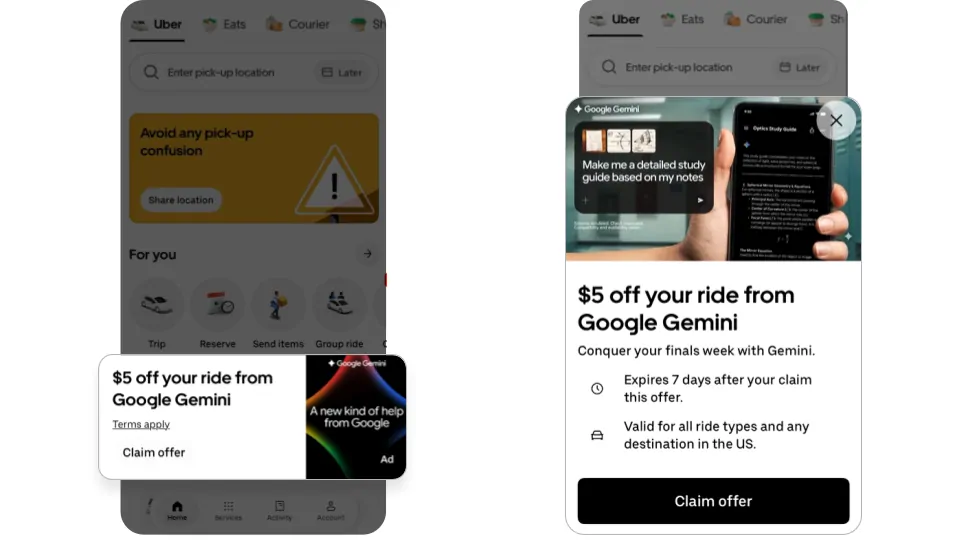
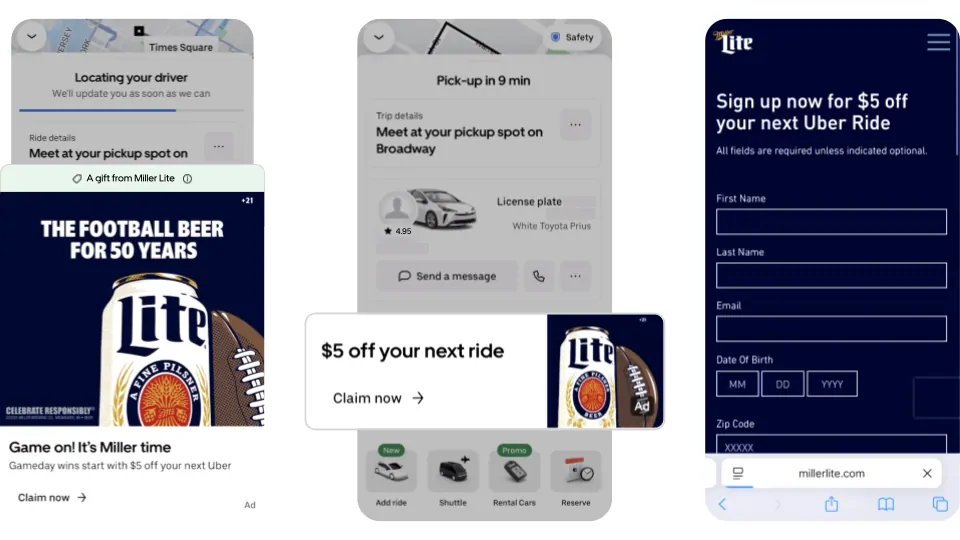
Uber also plans Sponsored Upgrades, which let a brand fund a premium ride tier such as Uber Comfort or Uber Black. Google Gemini and Molson Coors were among the early partners testing the formats.
Premium Uber Eats Formats Lead the Feed
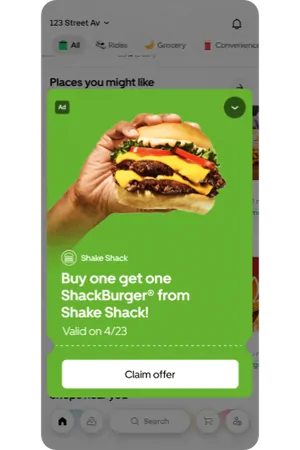
On Uber Eats, the new formats give brands placements above the standard listing feed. Brand Takeover runs a full-screen unit when a customer opens the app, Item Showcase presents a shoppable carousel of menu items that can be added to cart, and Offers Spotlight surfaces deals in a dedicated placement. Shake Shack was an early Brand Takeover partner.
Where the Strategy is Heading
Uber is following a pattern among commerce and delivery platforms that built retail media businesses on first-party purchase data and are now carrying that data to the channels where consumers browse.
Instacart has tied its retail media to Google Shopping, and DoorDash has integrated Wolt's ad offering with Meta. For Uber, the offsite pilot reframes a business it has run inside its own apps into one that competes for budgets across the open web, where the value it brings is measurement anchored to actual orders.
Uber Continues to Expand its Ad Business
The latest announcements build on Uber's broader push into advertising. Uber Advertising launched in 2022, and programmatic buyers gained access to Journey Ads in 2024. The expansion comes as advertising becomes a larger source of revenue for ride-hailing and delivery platforms. Uber reported that its advertising business generated more than $2 billion in revenue during 2025.
The company also reported first quarter revenue of $13.2 billion, up 14% year-over-year. During the same period, trips increased 20% to 3.6 billion, supported by a 17% increase in monthly active users.
As Uber adds more advertising inventory inside its apps and extends campaigns to external platforms, it is positioning its ad business to capture more of the budgets that brands already spend across search, social media, CTV, and retail media.
Recap
What is Uber Advertising's Offsite Ads?

It is a new product that lets brands run Uber-powered ad campaigns on external channels such as Meta and Google Shopping, marking the first time Uber has sold advertising beyond its own apps.
How does Offsite Ads target and measure audiences?
It uses Uber's first-party order and ride signals to build audiences, and because purchases complete on Uber Eats, it measures outcomes against orders and store visits.
What does the move mean for the retail media market?
It places Uber alongside Instacart and DoorDash in extending retail media off-platform, signaling that commerce data, not just ad inventory, is becoming the product these networks sell.