





.webp)




Shopify has launched connector apps for ChatGPT and Claude, allowing merchants to manage their stores directly inside chat interfaces. According to the company, the update allows merchants to manage their store, monitor performance, gain insights, update product listings, and track orders within the AI tools.
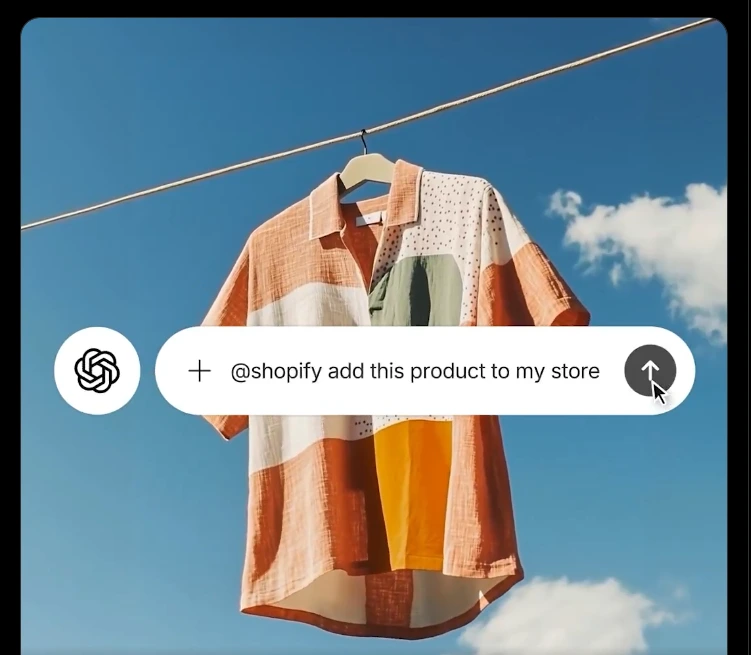
Shopify President Harley Finkelstein confirmed the rollout in a LinkedIn post, stating that the decision was based on internal survey data showing that 83% of merchants already use ChatGPT.
This move extends beyond content generation or customer support use cases. Shopify is placing operational control inside the same AI tools merchants already use daily.
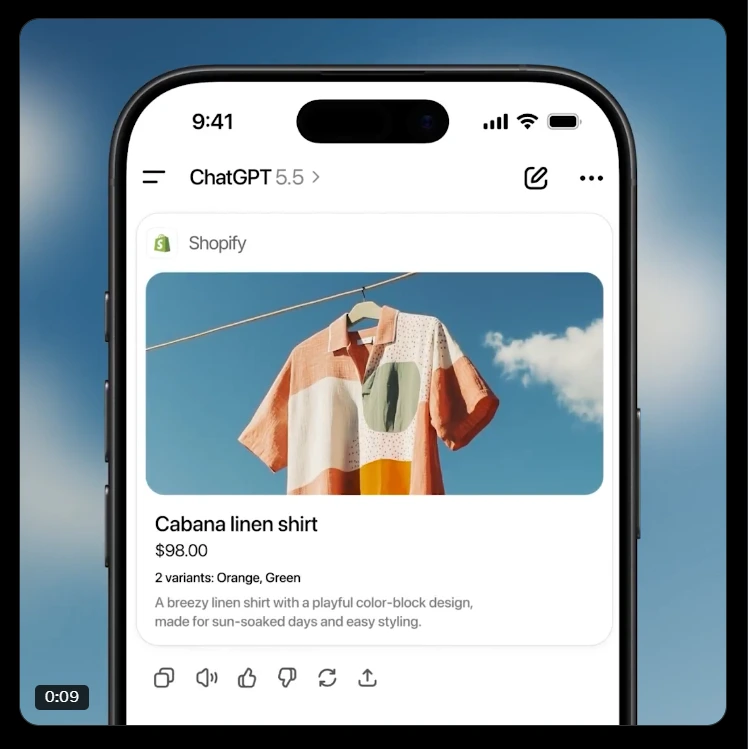
How the ChatGPT and Claude Connectors Work
The connectors link a merchant’s store to ChatGPT or Claude. Once connected, the AI can access store data and respond to prompts tied to real business actions.
A merchant can ask for sales data, track orders, update products, or check performance without logging into the Shopify dashboard. The system pulls store data into the conversation and returns responses based on those requests.
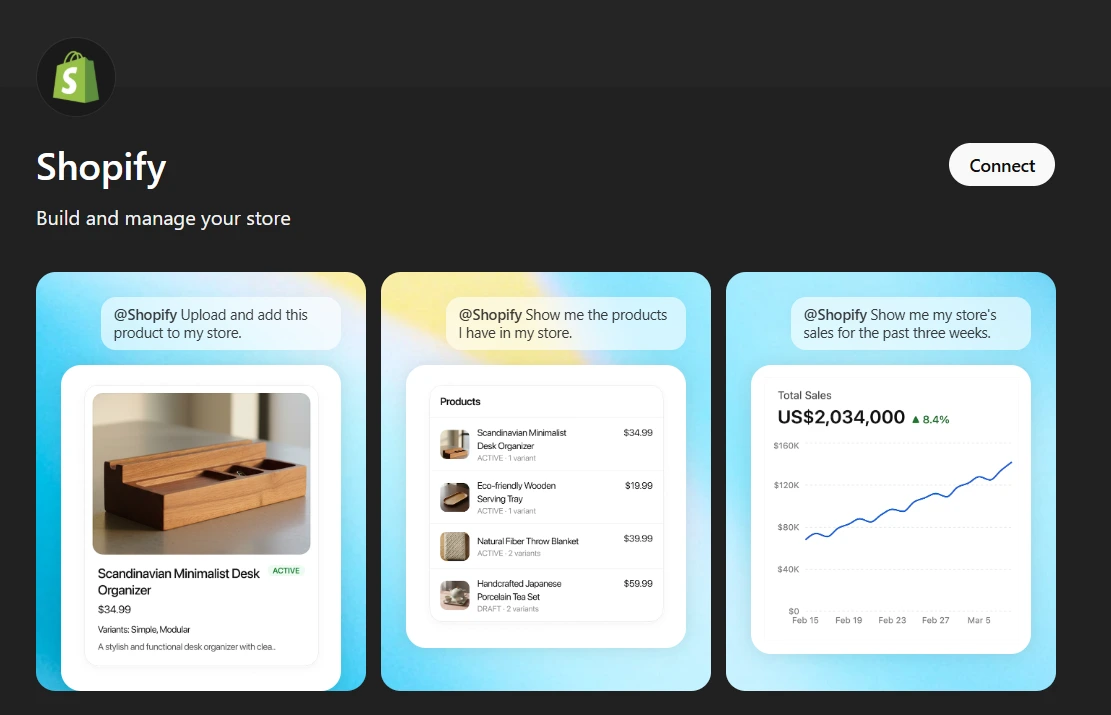
This changes how store management happens. Instead of navigating menus, the interaction becomes prompt-based. The company claims merchants can manage “their entire store” from within chat.
Merchants can connect their stores through the official connector pages on ChatGPT and Claude: ChatGPT Shopify connector and Claude Shopify connector. For instance, using ChatGPT, merchants can:
- Use their Shopify account to sign in and give ChatGPT access to their store data.
- Next, they can open a new ChatGPT conversation and start asking questions about their store. The AI assistant can respond to prompts tied to real store activity.
Built on Shopify’s Agentic Storefront System
This connector launch builds directly on Shopify’s broader push into AI commerce through its Agentic Storefronts system. The company introduced Agentic Storefronts in late 2025 as a way for brands to surface products across AI platforms like ChatGPT, Perplexity, and Microsoft Copilot. The system distributes product data from a single setup in the Shopify dashboard without requiring separate integrations.
In March this year, Shopify expanded that system so all stores could appear inside ChatGPT by default. Products are surfaced when users search within the chat, turning AI tools into a discovery channel.
However, Shopify and OpenAI have adjusted how transactions work. Instead of completing purchases inside chat, users are now redirected to the merchant’s storefront to finish checkout.
This shift keeps ownership of customer data, payment methods, and post-purchase flows with the merchant.
A Shift in How Commerce Tools are Structured
Shopify’s updates point to a broader change in how commerce tools are structured. Instead of building everything inside a single platform, the company is extending its infrastructure into AI ecosystems.
Agentic Storefronts handle how products appear in AI conversations. The new connectors handle how merchants manage their stores within those same environments.
Shopify is aligning its platform with how merchants and consumers are already behaving. Discovery is moving into AI chats, and now store operations are following the same path.
Recap
What exactly changed with Shopify’s new connectors?

Shopify introduced connectors for ChatGPT and Claude that allow merchants to run store operations directly inside chat. According to the company, merchants can check sales, update products, and track orders without logging into the Shopify dashboard.
How do the ChatGPT and Claude connectors actually work?
The connectors link a merchant’s Shopify store to the AI tool. Once connected, the AI can access store data and respond to prompts tied to real actions like retrieving reports or updating listings.
Does this mean merchants no longer need the Shopify dashboard?
The company claims merchants can manage their entire store within chat, but the dashboard still exists. The change introduces a prompt-based alternative to navigating menus.

 Free tool · Meta Ad Library