







OpenAI has officially confirmed the end of Instant Checkout inside ChatGPT. In a recent blog post, OpenAI confirmed the shutdown:
"We've found that the initial version of Instant Checkout did not offer the level of flexibility that we aspire to provide, so we're allowing merchants to use their own checkout experiences while we focus our efforts on product discovery."
The company launched Instant Checkout in September last year as its first attempt to make ChatGPT a complete e-commerce destination. At that time, OpenAI said the feature will let users find a product and complete a purchase inside the chat session, without being redirected to a retailer's site.
Instant Checkout connected ChatGPT users to a limited roster of merchant partners through direct inventory and payment integrations. A user could search for a product, review options with pricing, and complete the transaction without leaving the chat. OpenAI positioned itself as a commerce intermediary, handling the order while maintaining the ChatGPT session. Shopify was among the merchant infrastructure providers integrated into the system.
The feature was part of OpenAI's broader agentic commerce strategy, built around the Agentic Commerce Protocol (ACP), a merchant integration layer developed with Stripe. ACP was designed to separate product discovery from transaction completion, though Instant Checkout was the exception — it kept both inside ChatGPT.
Why Instant Checkout was scaled back
The feature never gained meaningful adoption. As The Keyword reported earlier this year, trade reporting indicated OpenAI was stepping back from direct checkout well before this official announcement. Only around 12 of Shopify's millions of merchants had gone live with the feature.
Another challenge was, users who found products through ChatGPT preferred to complete purchases on familiar retail sites, where saved payment methods and account history were already in place. Real-time product data synchronisation across millions of merchant catalogues also proved difficult to scale. Also, OpenAI had not built the tax collection infrastructure required for merchant-of-record transactions across U.S. states.
OpenAI's official pivot: discovery over transactions
OpenAI says it's now pivoting ChatGPT to product discovery platform. Rolling out this week to all ChatGPT tiers — Free, Go, Plus, and Pro — are three new discovery features: visual product browsing, side-by-side comparisons of price, reviews, and specifications, and image-upload to find products from inspiration photos. After finding a product, users are redirected to the retailer's own checkout.
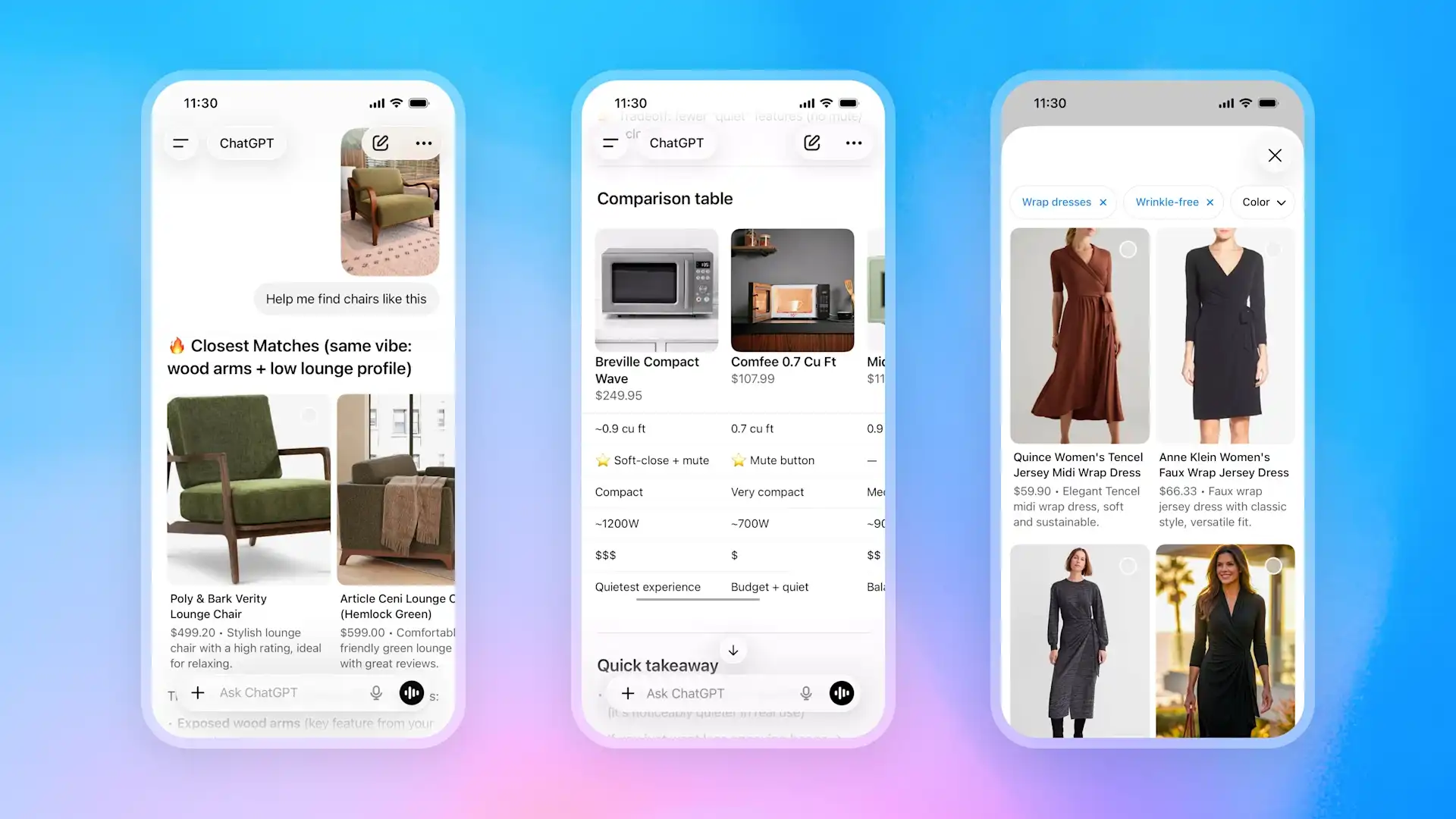
According to the company, shoppers can now "browse products visually, compare options side-by-side, and get detailed, up-to-date information—all in one place." Seven major retailers are now live via ACP: Target, Sephora, Nordstrom, Lowe's, Best Buy, The Home Depot, and Wayfair.
Walmart and Shopify illustrate the two ends of the model
With the retreat from Instant Checkout, companies like Shopify and Walmart are already taking a different approach. OpenAI says interested merchants in "experimenting with deeper integrations and native experiences on ChatGPT continue to have the option to develop ChatGPT apps."
Shopify has said that its merchants can now be integrated automatically through Shopify Catalog, requiring no setup from individual merchants. Walmart is also replacing its Instant Checkout integration with its Sparky chatbot after disappointing sales. OpenAI comfirmed that the platform now has a dedicated in-ChatGPT app with account linking, loyalty program integration, and native Walmart payments, live on web with iOS and Android coming.
The two approaches mark the two ends of OpenAI's commerce strategy. The company now positions itself as the discovery and comparison layer, routing purchase intent to retailer-controlled checkout rather than completing transactions inside ChatGPT.
Recap
What was ChatGPT Instant Checkout and why was it shut down?

OpenAI launched Instant Checkout in September 2025, allowing users to buy products without leaving ChatGPT. The company shut it down within six months, stating it "did not offer the level of flexibility that we aspire to provide." Only around 12 merchants ever went live, and users tended to prefer completing purchases on familiar retail sites where they had saved accounts and payment methods.
What is replacing Instant Checkout in ChatGPT?
OpenAI is rolling out enhanced product discovery tools to all ChatGPT tiers this week: visual product browsing, side-by-side comparisons of price, reviews, and specifications, and image-upload to find products from inspiration photos. After finding a product, users are redirected to the retailer's own checkout. Seven major retailers are live via ACP, and all Shopify merchants are automatically integrated via Shopify Catalog.
How does the Walmart ChatGPT integration work?
Walmart has a dedicated in-ChatGPT app with account linking, loyalty program integration, and native Walmart payments. It is live on web now, with iOS and Android coming. This represents a deeper integration than the standard ACP model used by Target, Sephora, and the other major retailers.