








OpenAI is rolling out new campaign-management controls inside ChatGPT Ads Manager Beta. According to an email sent to advertisers, the company has introduced several new tools, including daily budgets, geo-targeting, and expanded reporting. It is also testing dynamic CTA buttons inside some ChatGPT ads.
The company first launched ChatGPT Ads Manager in early May to all U.S. advertisers. When OpenAI introduced the ad platform, it marked the start of a more structured advertising system inside ChatGPT. According to OpenAI’s help documentation, the platform was built as a self-serve interface where advertisers can sign up, create campaigns, and manage them without relying entirely on agency partners.
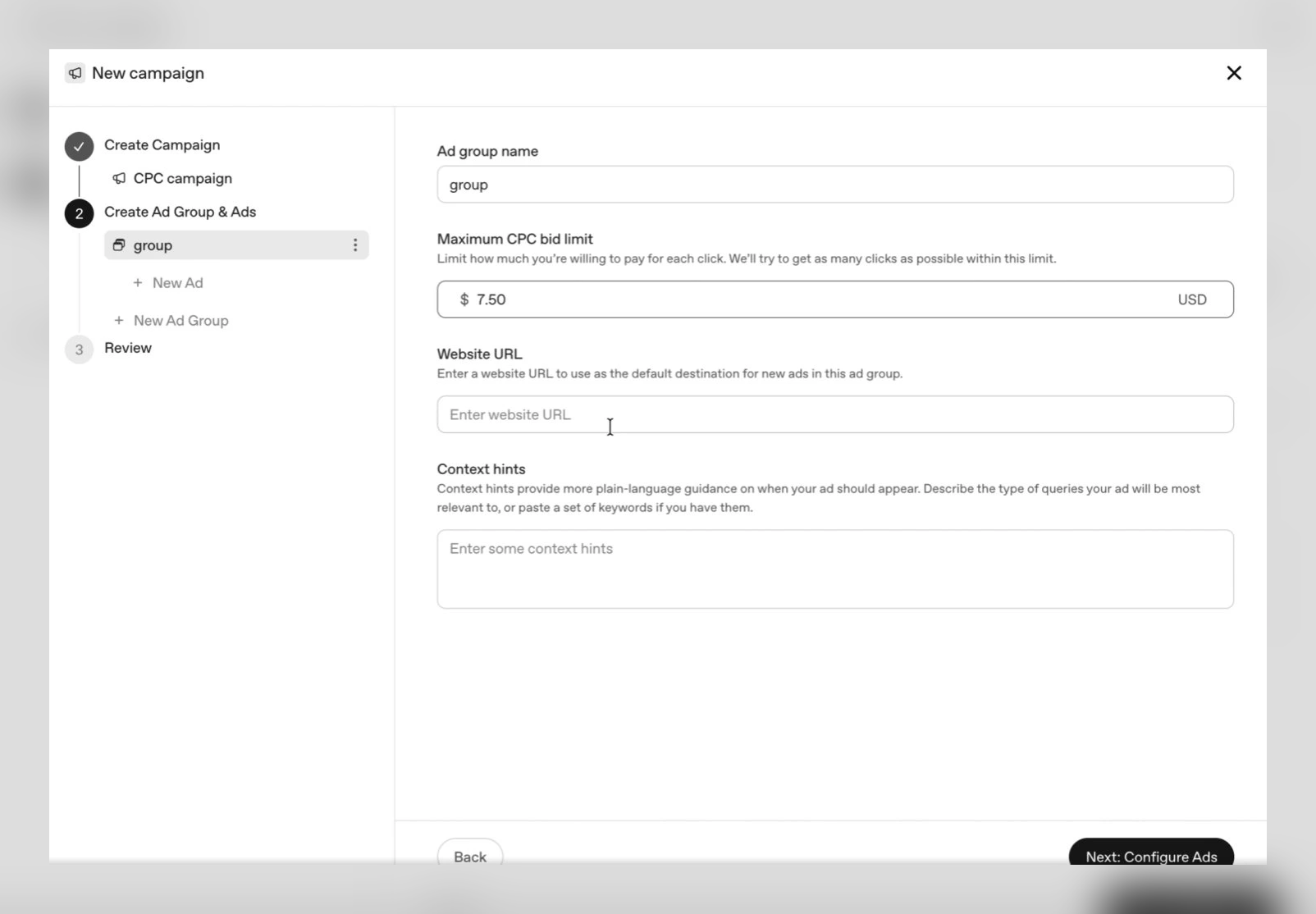
The launch included CPC and CPM bidding models, along with Conversions API and pixel tracking. It also introduced agency partners such as Dentsu, Omnicom, Publicis, and WPP; tech partners including Adobe, Criteo, Kargo, Pacvue, and StackAdapt, and removed the $50,000 minimum spend requirement.
The new update is an extension of the same self-serve Ads Manager introduced earlier this month.
Daily Budgets Join Lifetime Pacing
The company has added daily budgets, giving advertisers more control over how spending is distributed over time. Advertisers can now choose between a daily or lifetime budget when creating new campaigns inside Ads Manager.
They can set how much they want to spend per day, instead of only defining broader campaign-level limits. The daily option is limited to newly created campaigns for now.

Geo-Targeting Extends to State, DMA, and ZIP
OpenAI has expanded U.S. location targeting from country-level only to state, designated market area, and ZIP code. Targeting can be configured during campaign setup or adjusted later in campaign settings.
The expansion brings ChatGPT ad targeting closer to the regional and local controls that have been baseline on Google Ads and Meta Ads Manager for years, and opens the platform to local-business and DMA-level regional campaigns that were not previously possible. Multi-location retailers, regional service brands, and small businesses gain the geo controls they need to treat ChatGPT as a viable media channel rather than a national-only buy.
Aggregate Totals Land in Reporting
Ads Manager table views now display aggregate totals for impressions, clicks, and spend across campaign, ad group, and ad-level reporting. The change lets advertisers assess campaign performance directly inside the dashboard without exporting data to a separate spreadsheet to roll up.
Dynamic CTA Buttons in Early Test
OpenAI is separately testing dynamic call-to-action buttons inside a small subset of ChatGPT ads. According to the company’s email, a small subset of ads may now display CTA buttons such as “Shop Now,” “Book Now,” “Sign Up,” or “Learn More.”
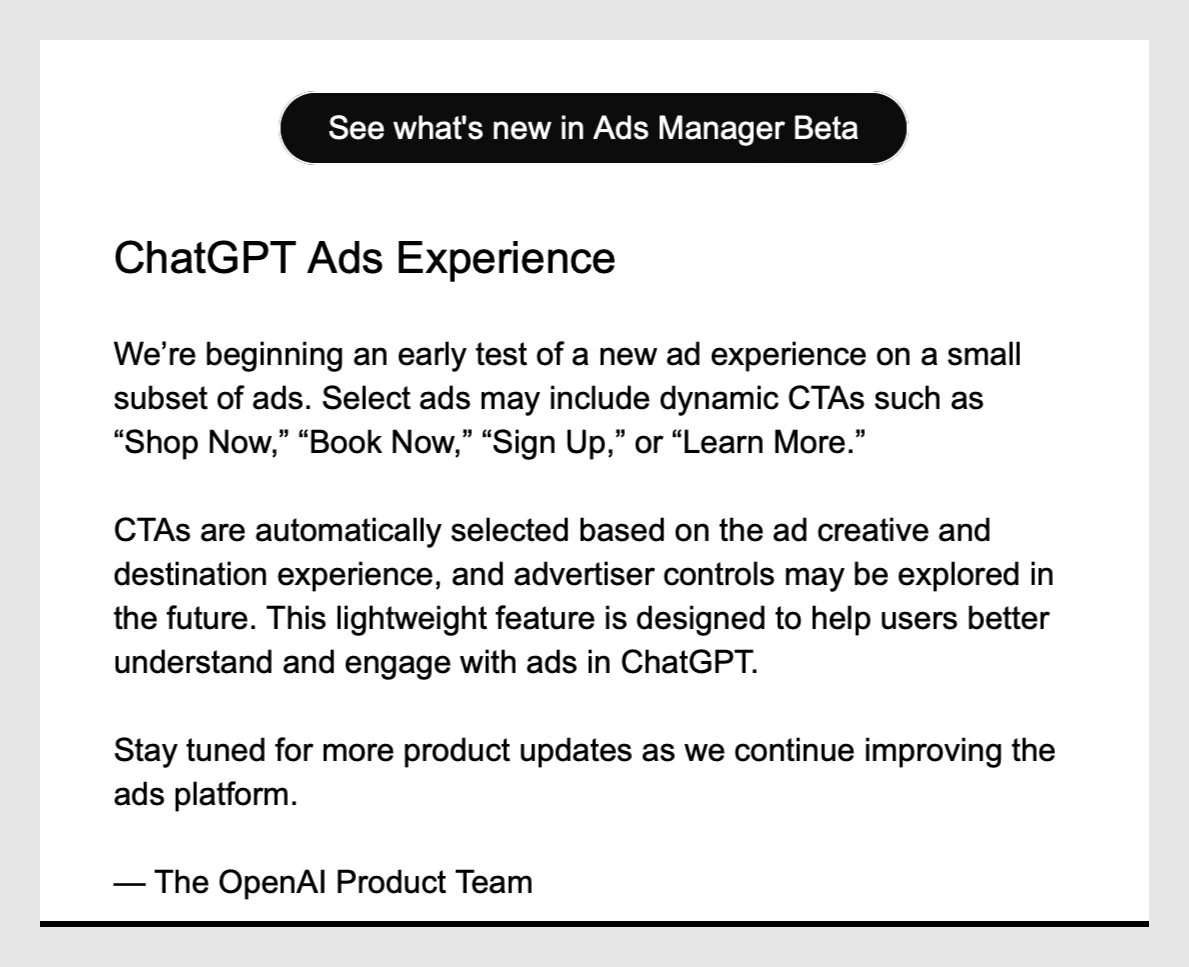
OpenAI says these buttons are selected automatically based on ad creative and the advertiser’s destination page. The company described the format as a "lightweight" enhancement to help users better understand and engage with ads in ChatGPT. The Keyword previously covered the dynamic CTA test last week.
Why This Matters For Advertisers
The release closes the most visible operational gaps in Ads Manager since OpenAI opened the self-serve portal in beta three weeks ago. The company has been building the components needed for a larger advertising business. Earlier signals included ad placements and international expansion, and retailer integrations. These updates add further evidence that the company is moving toward a more complete ad-buying platform.
ChatGPT ads sit inside the conversational experience, unlike traditional search or social feeds where ads appear as banners or post placements. These ads are expected to appear within or alongside responses when users engage with commercial or intent-driven prompts.
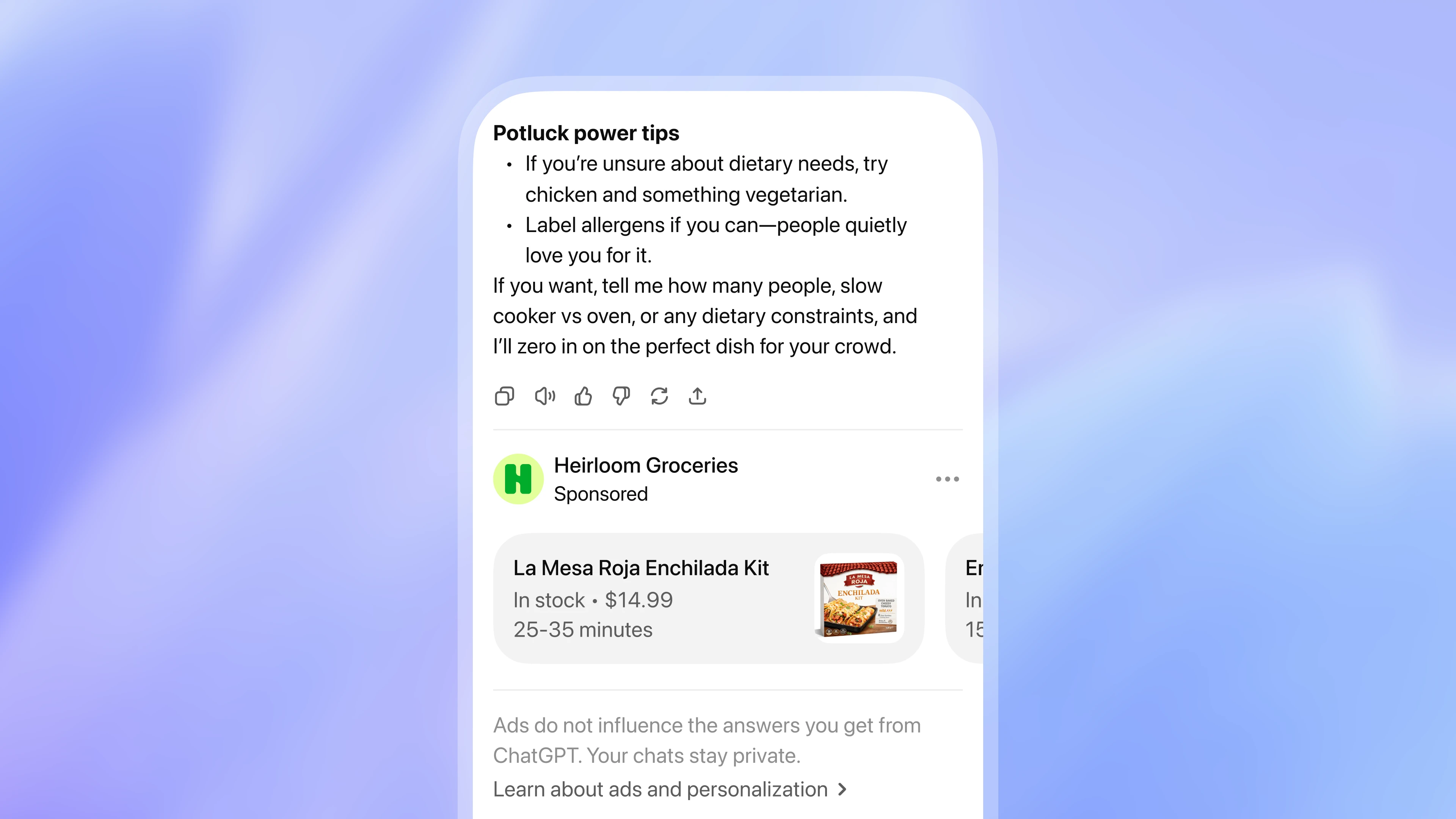
According to ChatGPT ad rolout materials, ads are designed to be delivered in a way that connects directly to user query context. This means the system can surface sponsored content when a conversation relates to shopping, product discovery, or decision-making scenarios.
ChatGPT ads are currently shown only to Free and Go users, while Plus, Pro, Business, Enterprise, and Edu subscribers do not see ads. Advertisers using Ads Manager can only reach users on ad-supported plans, not premium or enterprise tiers.
Recap
What is OpenAI changing in ChatGPT Ads Manager?

OpenAI has added daily budgets, granular U.S. geo-targeting at the state, designated market area, and ZIP-code level, and aggregate reporting totals to ChatGPT Ads Manager Beta.
How do the new campaign controls work?
Daily budgets are available alongside lifetime budgets and apply only to newly created campaigns. Geo-targeting can be set to state, designated market area, or ZIP code at campaign setup or later in settings. Aggregate totals appear automatically in Ads Manager table views at the campaign, ad group, and ad-level reporting tiers.
What is OpenAI testing in ChatGPT ads beyond budget and targeting tools?
OpenAI is testing dynamic call-to-action (CTA) buttons in selected ads. These include options like “Shop Now,” “Book Now,” “Sign Up,” and “Learn More,” which are automatically chosen based on the ad creative and landing page experience.