






OpenAI has officially opened its ChatGPT Ads Manager to U.S. advertisers, moving the product from early testing into a broader beta release. According to the company’s announcement, businesses of all sizes, from small startups to large brands, can now sign up and run campaigns through a self-serve platform.
This update confirms what has been developing over the past few months. Earlier reports from The Keyword tracked tests of a self-serve interface, CPC pricing experiments, and a gradual expansion of ad inventory. With this announcement, ChatGPT moves from an experimental placement to a direct media-buying channel with its own interface and campaign tools. Advertisers can sign up at ads.openai.com to access the platform in beta.

CPC Bidding Introduced Alongside CPM
The Ads Manager supports two buying options: CPC bidding and CPM. A previous report said OpenAI was switching from CPM to CPC, with bids set between $3 and $5 per click. The company has now confirmed that it is adding cost-per-click pricing, allowing advertisers to choose between CPC and CPM, depending on campaign goals.
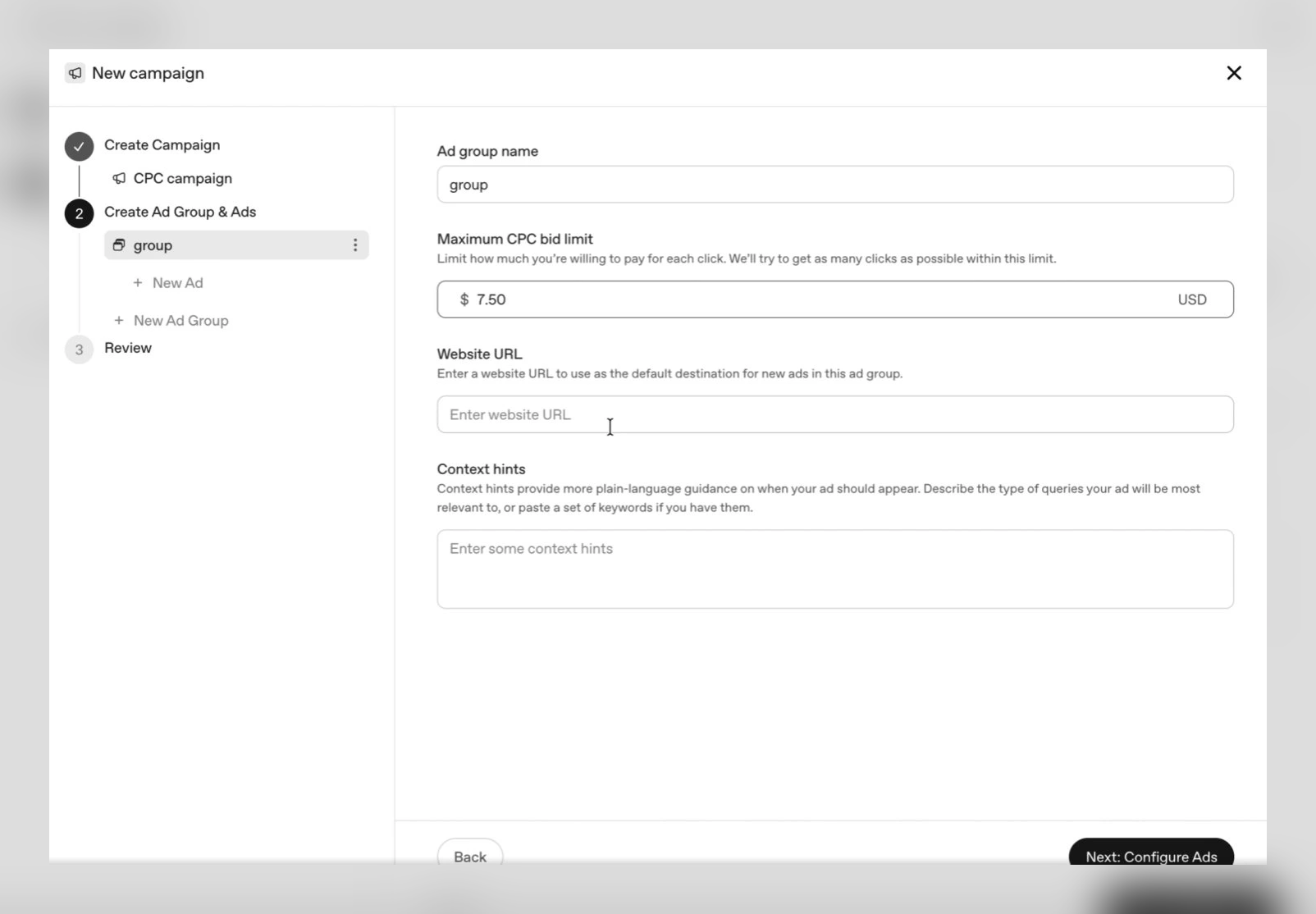
With CPC, advertisers pay when a user clicks on an ad. With CPM, they pay for impressions. For example, a performance-focused campaign can use CPC to track direct engagement, while a brand awareness campaign can still rely on impression-based pricing.
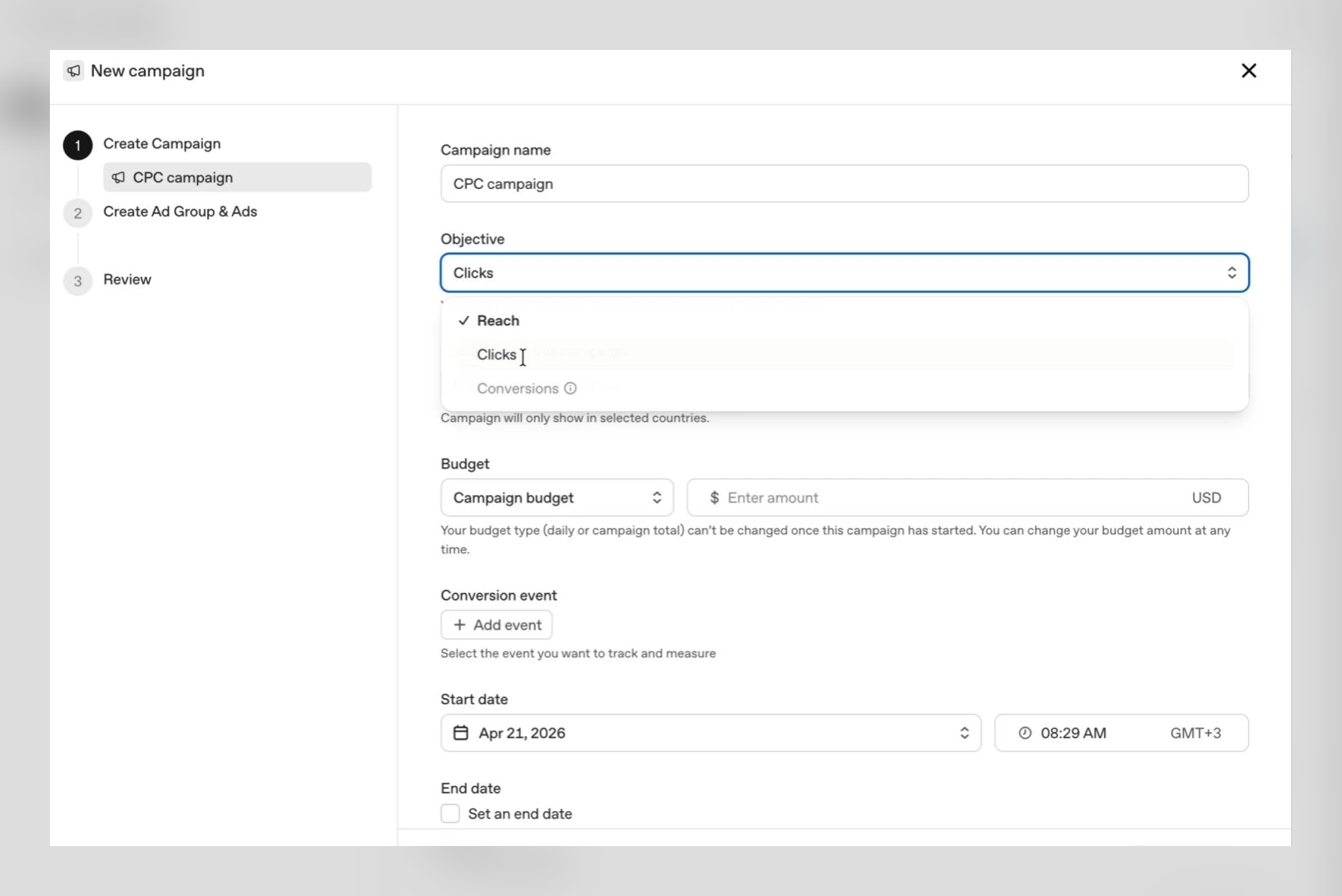
The company says its system controls ad delivery regardless of how campaigns are bought. Whether a campaign runs through an agency partner or directly through the platform, OpenAI’s infrastructure determines when and where ads appear.
Measurement Expands with Conversions API and Pixel Tracking
OpenAI is also launching Conversion API and pixel-based measurement for ChatGPT advertisers. These tools allow advertisers to track what happens after a user interacts with an ad, such as purchases, sign-ups, or lead submissions. Reports from early pilots said some advertisers encountered a reporting issue in the Ads Manager that blocked visibility into campaign results.
The company is aiming to address this issue. The Conversions API works by sending event data directly from an advertiser’s server to OpenAI, while the pixel tracks actions on a website. Together, they provide a more complete view of campaign performance beyond clicks.
Advertisers can connect their websites or apps to ChatGPT’s ad system. When a user clicks an ad and completes an action, that data is sent back in an aggregated format.
This brings ChatGPT closer to the measurement systems used by other major platforms. Meta introduced the same server-side approach following the iOS 14 changes that disrupted browser-based tracking, and it has since become a standard requirement for platforms competing for lower-funnel performance budgets.
Conversion tracking has become standard, especially after privacy changes limited traditional tracking methods.
OpenAI Names Agency and Tech Partners
For the first time, OpenAI has named its agency and technology partners. Agency partners include Dentsu, Omnicom, Publicis, and WPP. These groups manage large global ad budgets, which signals where early spending may come from.
Technology partners include Adobe, Criteo, Kargo, Pacvue, and StackAdapt. These companies support campaign management, retail media, programmatic buying, and creative workflows.
This partner model follows a familiar pattern. Large platforms often start with agency relationships to drive early adoption, then expand access through self-serve tools.
What this Means for Advertisers and Marketers
From a media buying perspective, ChatGPT now fits more clearly into the digital advertising mix. Advertisers can plan campaigns with defined pricing models, track conversions, and integrate with existing tools.
ChatGPT now has the components needed to evaluate it has a media buy: defined ad products, two buying models, post-click measurement through Conversion API, and direct access through a serve-serve platform. The scale and quality of performance data available at launch will be the first real test of whether ChatGPT ads can deliver results alongside established channels.
The structure also mirrors how other platforms matured over time. Early controlled pilots have given way to broader access, supported by agency partnerships and standardized measurement tools.
Ads in ChatGPT are currently being tested and are shown to logged-in users on the Free and Go plans, while paid tiers such as Plus, Pro, Business, Enterprise, and Edu are ad-free. Recent reports suggest that logged-out users are also being included in separate, limited test rollouts.
OpenAI has stated that ads do not influence ChatGPT’s responses. The company explains that ads run on separate systems from the model, meaning advertisers cannot change, rank, or affect the answers the AI generates, and ads are clearly labeled and separated from responses.
Recap
What is the ChatGPT Ads Manager?

The ChatGPT Ads Manager is OpenAI’s self-serve advertising platform that allows US businesses to create, manage, and run ads directly within ChatGPT. It supports both CPC and CPM bidding models.
Who can use the ChatGPT ads platform?
OpenAI says the Ads Manager is currently available in beta to all US businesses, including small businesses, startups, and larger brands.
What bidding options are available in ChatGPT ads?
Advertisers can choose between CPC (cost per click) and CPM (cost per thousand impressions), depending on their campaign goals.

 Free tool · Meta Ad Library