




Google is launching Search profiles, a claimable page that brings together content from a publisher or creator across YouTube, other social platforms, and their website into a single place on Google Search and Discover.
According to Google, the profiles act as a central hub where audiences can find a creator's latest content across various formats from the web. The company says the goal is to help audiences find "accurate, up-to-date information" about creators and publishers while giving creators and publishers more control over how they appear in Search.
What are Google Search Profiles?
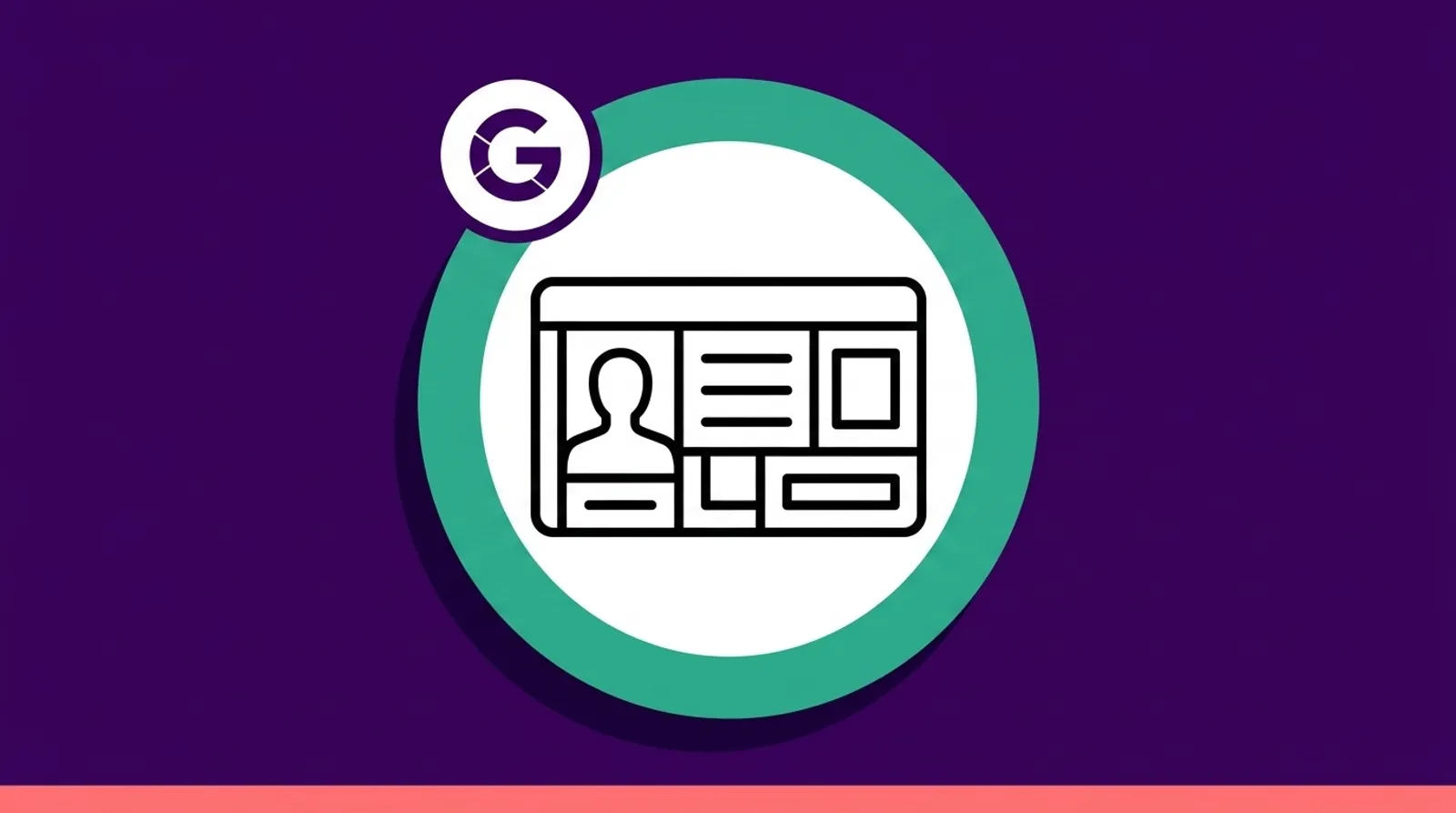
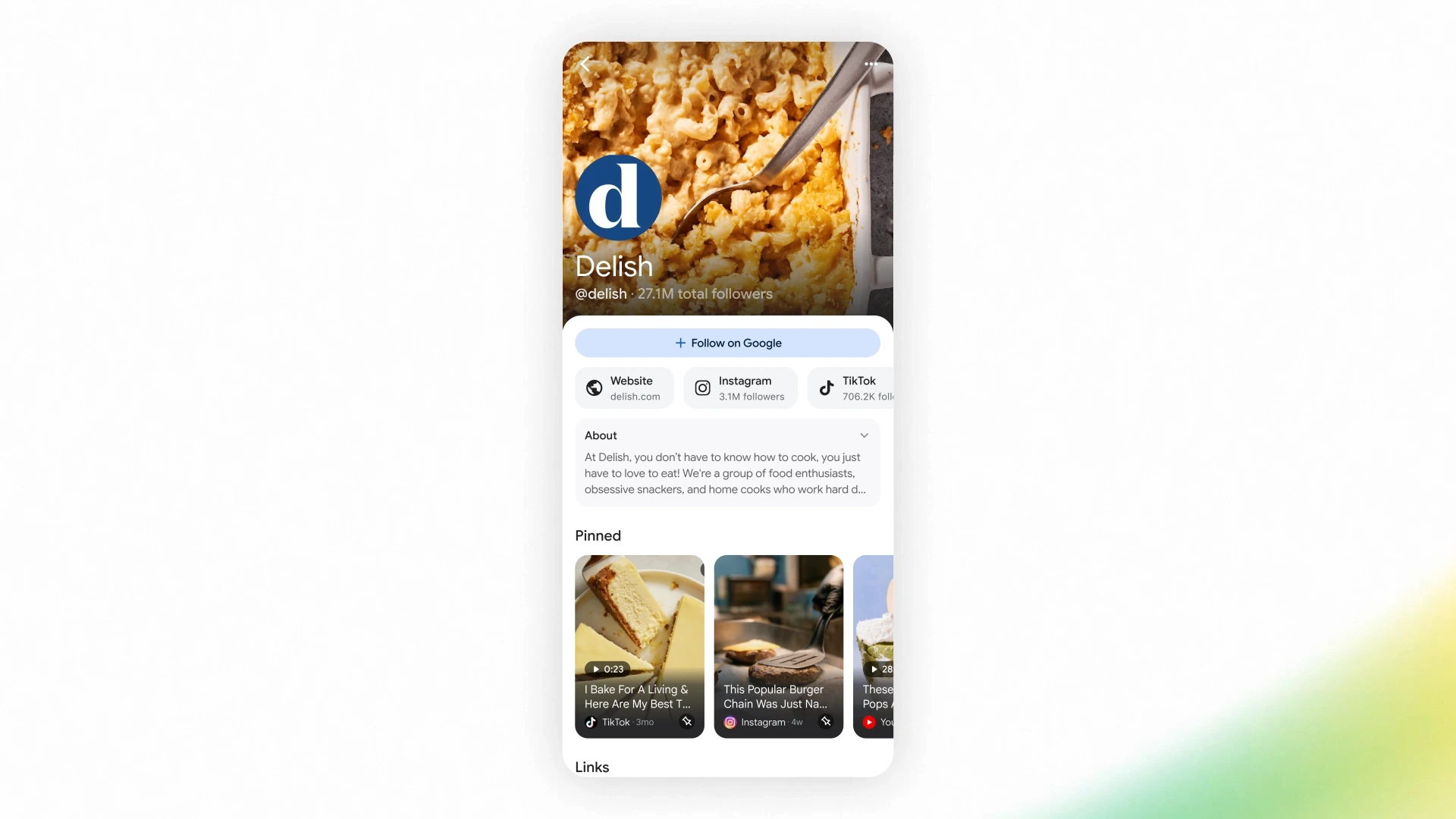
Search profiles are dedicated pages on Google that include a creator's or publisher's avatar, banner image, handle, bio, website link, and links to YouTube, Instagram, X, TikTok, and other social or video platforms. The page also surfaces the source's latest articles, videos and social posts, and lets the owner pin specific content to the top.
In a YouTube Shorts shared on YouTube Insider, Rene Ritchie explains that Search profiles function as a searchable, customizable page that brings together a creator’s broader online presence into a single view inside Google Search. This means creators and publishers are not limited to a single platform identity when someone searches for them on Google.
Ritchie adds that users can customize their profiles by changing profile photos and banner images, pinning recent or priority content, and adding key links.
How the Profiles Appear in Search and Discover
Search profiles can be accessed when people search for a creator's name or handle. They can also be surfaced through Google Discover, where users may see profile information alongside content recommendations.
The profiles are also connected to Google's Knowledge Panels. Creators who already have a Knowledge Panel will see it enhanced with profile information, including updated profile images, featured content, social links, and a link to their Search profile. On mobile, users can access a profile by tapping "View Search Profile" inside a creator's knowledge panel. Eligible users without an existing Knowledge Panel may receive one after claiming a profile.
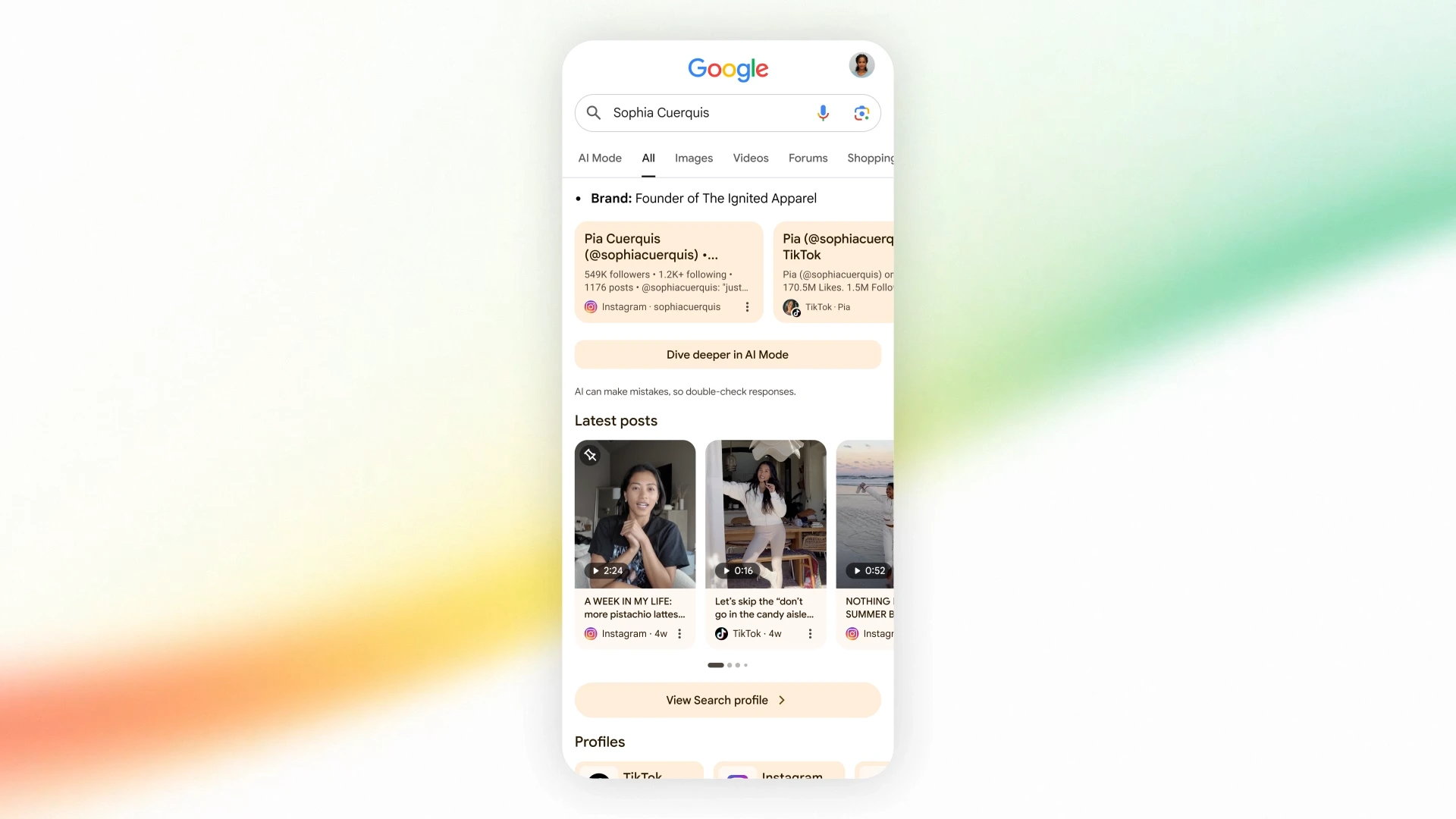
They can also tap a source's name on a Discover card, or go to a profile URL at profile.google.com. From the profile itself, users can follow the source, which surfaces more of its content on Discover. Google states that creating a profile does not directly affect content ranking on Search.
Who Can Create Search Profiles?
Search Profiles are currently available to creators, publishers, and organizations with a significant following on supported platforms. According to Google's documentation page, eligibility requires a public profile with at least 100,000 followers on YouTube, Instagram, or X. Creators who only have a TikTok presence need at least 300,000 followers. The owner must be 18 or older, the linked account must be public, and content must comply with Google’s user-generated content policies.
Eligible creators and publishers can sign up through Google Search Profiles setup page and claim their profile after verifying their identity and linked accounts.
The rollout is currently limited to the U.S., although Google says it plans to expand access to additional countries later this year.
Why the Launch Matters for Creators and Publishers
The launch aims to give creators and publishers a new way to control how they appear in Google Search. Until now, people searching for a creator, journalist, publication, or media brand would often see a mix of website results, social profiles, videos, and other content spread across multiple search listings. With Search profiles, Google is creating a dedicated space where eligible creators and publishers can bring those assets together under a single profile.
Creators, for instance, can highlight content from different platforms without relying on a single social network. Publishers can use the profile to surface articles, social channels, and other content connected to their brand.
Why Google is Building This Now
Search profiles arrive against a backdrop of publisher and creator pressure on Google over how AI Search features have reshaped click-through behaviour. AI Overviews launched in U.S. Search in May 2024, and AI Mode followed on desktop in 2025. Publishers and creators have spent the period that followed asking Google for clearer ways to manage their identity inside Search as audiences increasingly arrive through AI-summarized results rather than blue links.
Search profiles do not directly address that grounding question, but they sit alongside the two Search Console controls Google shipped recently. Google has rolled out a new opt-out toggle for AI Overviews and AI Mode, and a Generative AI performance report for measuring how pages appear inside AI surfaces. These updates could be part of Google's response to publisher and creator pressure following AI Overviews-driven traffic shifts.
Recap
What is a Google Search profile?

A Search profile is a claimable page on Google Search and Discover that brings a publisher's or creator's content from across YouTube, other social platforms, and their website into one place. Each profile includes an avatar, banner image, bio, links and the source's latest articles, videos and social posts, and lets the owner pin specific content to the top.
How does a creator or publisher claim a Search profile?
Eligible accounts go to profile.google.com to check whether a profile has already been auto-generated, or to profile.google.com/claim to start a new one. Eligibility requires at least 18 years of age, a public account, and a minimum following on one major platform: 100,000 on YouTube, Instagram or X, or 300,000 on TikTok. Factual changes to a profile sit in a pending state until Google reviews them.
What do Search profiles change for publishers, creators and brands?
Search profiles give publishers and creators a managed surface on Google for the first time, with a follow option that surfaces more of a source's content inside Discover. The page consolidates a creator's identity across platforms, which is relevant to brands evaluating creator partnerships because audiences will increasingly arrive at a creator's full Google footprint through a single page. Google states that creating a profile does not directly affect content ranking on Search.