








Google is changing how its AI-powered Search products connect users to the wider web. The company is rolling out five new updates across AI Mode and AI Overviews designed to surface more website links, publisher content, and creator perspectives directly inside Search responses.
One of the biggest criticisms of generative search has been that AI answers can reduce website traffic by answering users’ questions without requiring a click. Google’s latest update appears aimed at addressing that concern by putting more emphasis on outbound links.
AI Answers Will Now Suggest What to Read Next
One of the biggest changes is a new “explore more” feature. After users receive an AI-generated answer, Google says Search may now recommend related articles, case studies, and deeper analysis on adjacent parts of the topic.
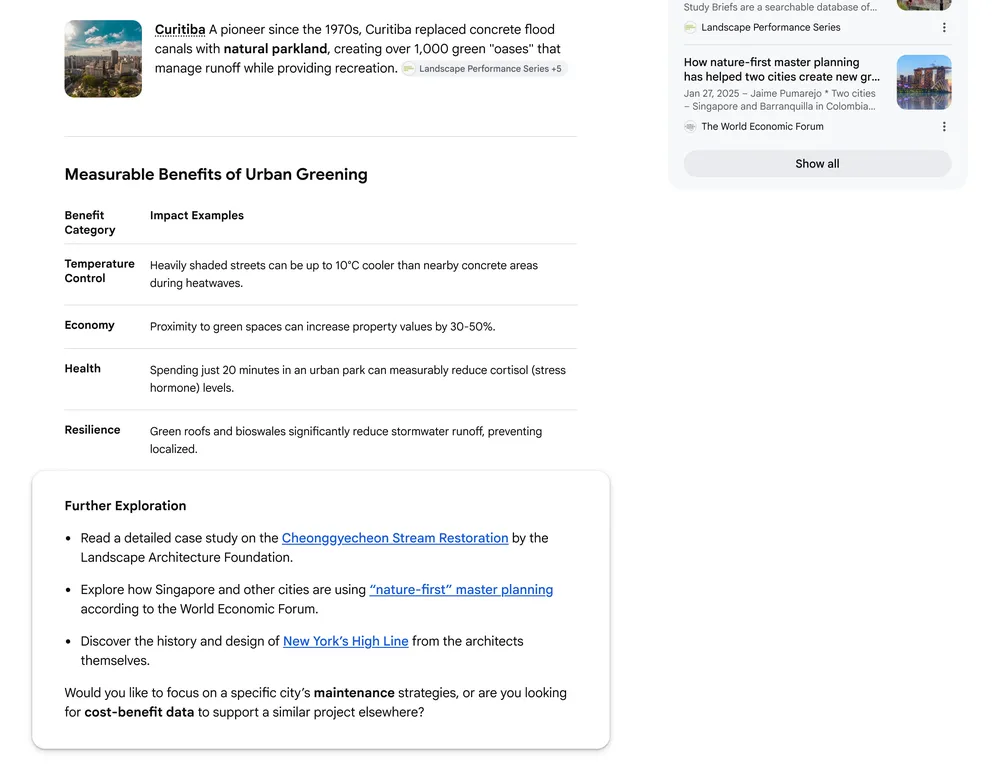
For example, someone searching about urban green spaces might first get an AI summary, then see links to articles about Seoul’s Cheonggyecheon restoration or New York’s High Line park.
That expands the search journey beyond one answer and could create more downstream traffic opportunities for publishers whose content fits those follow-up questions.
Subscription Content Gets a Visibility Boost
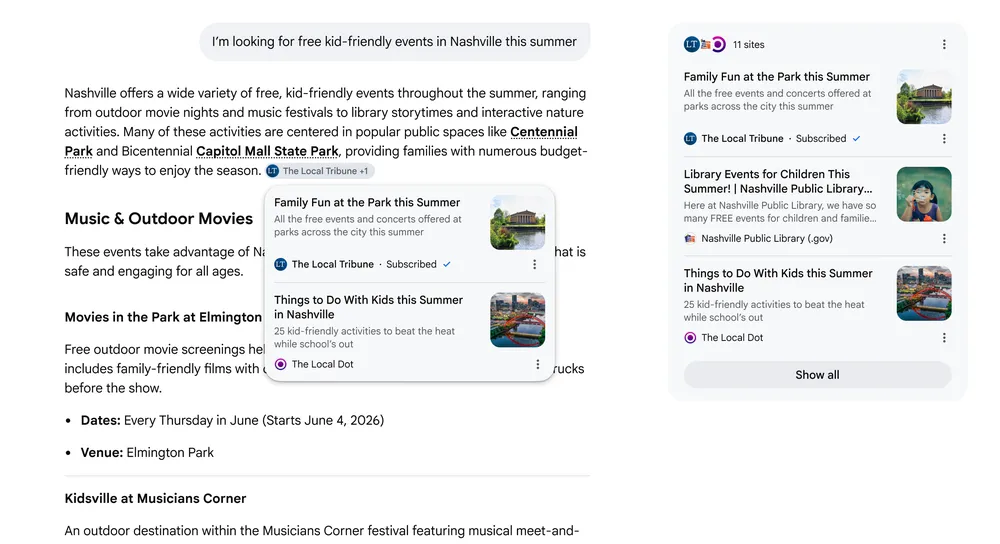
Google is also introducing labels for users’ existing news subscriptions. Inside AI Mode and AI Overviews, articles from publishers a user already subscribes to will now be marked with a “Subscribed” label.
For publishers, this notable because it gives subscription content a clearer identity inside AI-generated results, where source visibility has been a major concern.
Social Posts and Community Conversations Move Further Into Search
Google is also leaning harder into user-generated content. AI responses will now include previews from public discussions, forums, social posts, and other firsthand sources. These previews may include creator names, usernames, or community names.
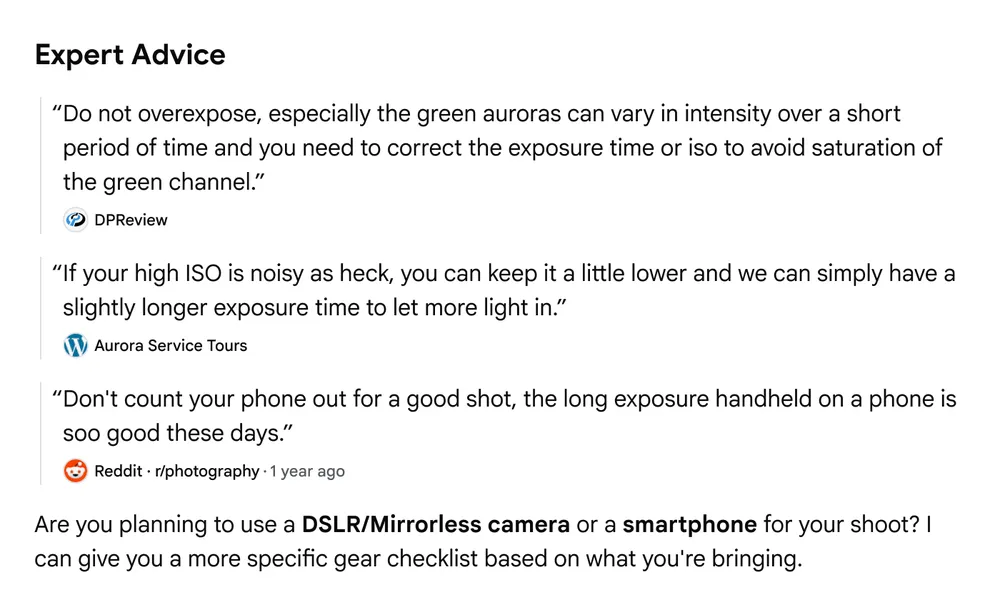
This builds on Google’s broader shift toward surfacing more human perspectives in Search, especially for advice-based queries where users often want lived experience rather than just factual summaries.
More Links are Being Embedded Inside AI Answers
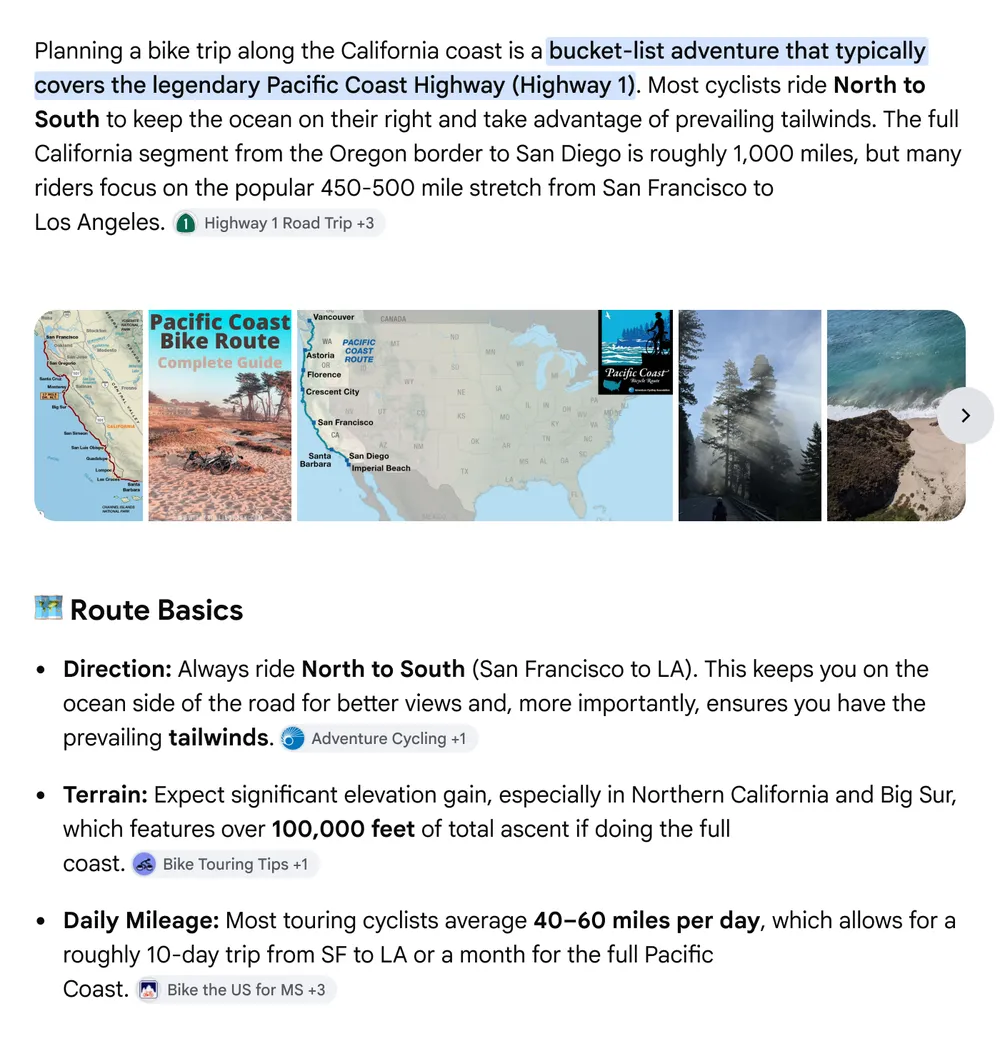
Google is also changing link placement. Instead of only showing source links at the top or bottom of an AI answer, the company says it will now place more links directly beside the relevant sentence or bullet point.
This means users reading an AI-generated trip itinerary, for example, may see a route guide linked beside the route description and a separate training article linked beside the mileage recommendation.
Desktop Users Can Preview Websites Before Clicking
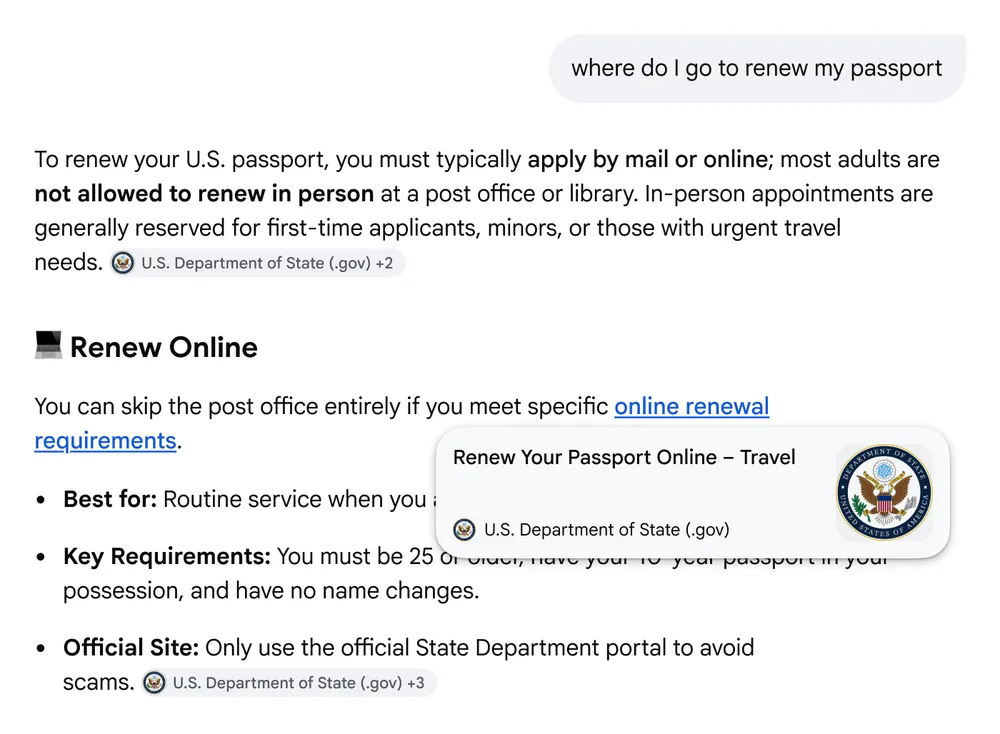
Google is adding hover previews for inline links on desktop. When users place their cursor over a link, they will see quick context such as the page title or website name before clicking through.
The company says this is designed to reduce hesitation when users are unsure where a link leads. Google's official announcement notes it uses "query fan-out," searching across multiple subtopics and data sources to find the most relevant sites to surface.
A Pattern, Not a Gesture
These five features represent the third time this year Google has announced link-visibility improvements for AI Search. An earlier update added more source links to AI Mode responses; before that, Google committed to publisher opt-out from AI Overviews following sustained industry pressure.
Google is systematically rebuilding the link layer in AI Search, adding more entry points for users to click out to the web and making source origins more transparent in the process.
What separates this round from the previous updates is the subscription label. Earlier link-visibility changes applied equally to all sources; the subscription label is the first feature that surfaces a specific content relationship — paid subscription status — as a visible signal inside AI answers. That changes the value proposition for news publishers who have been assessing whether AI search rewards their editorial investments.
Recap
What are the five new Google AI Mode features for publishers?

Google's five new AI Mode and AI Overviews updates are: subscription-labeled links that surface content from a user's paid news services, a "Further Exploration" section linking to in-depth articles at the end of AI responses, "Personal Perspectives" that surfaces firsthand social and forum discussions with creator context, more granular inline links placed next to relevant text within AI responses, and desktop hover previews showing the website name or article title before clicking.
What is Google's subscription labeling feature in AI Mode?
Google's subscription labeling feature marks articles from a user's paid news subscriptions with a "Subscribed" label directly inside AI responses. In early testing, users were significantly more likely to click labeled subscription links compared to unlabeled links. It is the first time Google has given paid subscription content preferred visibility inside AI Search answers.
How do these Google AI Mode updates affect publisher traffic?
Google's stated goal is to increase referral clicks from AI responses to publisher and creator content. The updates add new link types and surface more sources at multiple points in AI responses. The subscription labeling feature is the most direct signal for news publishers: content from paid subscriptions now has a visible label inside AI answers, and early testing shows users are more likely to click it.