
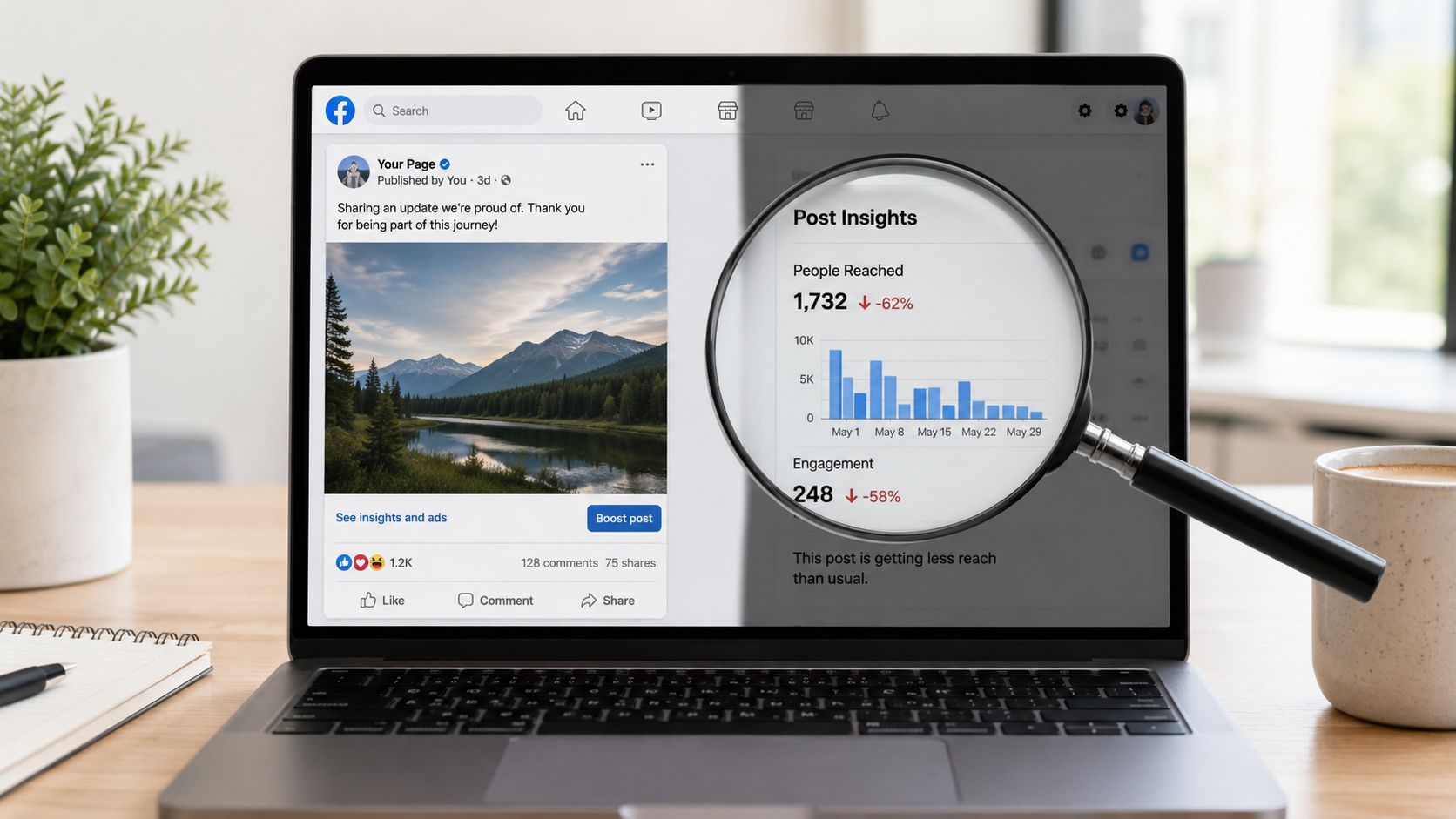

You post a thread that should travel, check the next morning, and the numbers look dead. Search doesn't surface the account the way it used to, replies seem buried, and the analytics chart looks nothing like a normal lull. That's the moment many users start typing their handle into search and wondering whether the problem is the post, the timing, or the account itself.
A Twitter shadowban test is useful only if it distinguishes ordinary volatility from real visibility restriction. On X, that means looking across multiple surfaces, not just one quick search. It also means treating X's own Account Status signals as part of the diagnosis, not a separate afterthought, because the platform's public language has long been blurry about what it does and doesn't suppress.
Table of Contents
- What a Twitter Shadowban Actually Means in 2026
- Why the label is too blunt
- How practitioners separate the states
- Use personal baseline comparisons, not platform-wide averages
- Read Account Status as a signal, not a rumor filter
What a Twitter Shadowban Actually Means in 2026
A marketer usually doesn't notice trouble because of one bad post. The signal is broader, a thread that should have picked up replies, a recent tweet that no longer shows up in search the way it did last week, and a follower graph that feels oddly quiet. The account still exists. The content still publishes. The reach just doesn't behave like a healthy account anymore.
That's why the word shadowban still survives, even though X doesn't present it as a single named switch. Practitioners use it as a shorthand for silent reach suppression, a cluster of visibility restrictions that can affect search, suggestions, replies, or recommendations without a direct notification to the account owner. X has often preferred softer language around behavioral signals and abuse reduction, which is exactly why the working term remains useful in diagnosis.
The ambiguity traces back to the 2018 controversy that helped popularize shadowban testing in the first place. In a response to Congress, Twitter said that on July 25, 2018, about 600,000 accounts were identified as affected by an auto-suggest problem, and the next day it publicly acknowledged that some accounts were not being auto-suggested even when individuals searched for their names, while denying that it was shadowbanning and saying it used behavioral signals to reduce spam and abuse.Twitter's 2018 congressional response on auto-suggest and visibility
That history matters because it explains the modern mindset. A good diagnostic doesn't ask whether X admits the label. It asks whether a post or account is being filtered on one or more surfaces. That's also why a lot of operators now pair public probes with native account checks and broader trend reading. X's ranking systems keep changing, and the move toward more AI-driven feed logic only makes a single surface test less trustworthy.
Practical rule: if the account still gets normal reach on some posts but not others, don't call it a shadowban yet. Check surfaces first, then decide whether the issue is enforcement, ranking volatility, or content fit.
A test is warranted when the drop feels persistent, broad, and inconsistent with the account's usual distribution. If the account just had one weak post, especially on a niche topic or a low-volume day, that's not enough to label suppression. If several recent posts all underperform, search visibility changes, and replies seem hidden outside the owner's own session, the account deserves a full diagnostic pass.
The Four Restriction States That Make Up a Shadowban
X users often talk about shadowban as if it's one thing. In practice, modern audit work treats it as a set of distinct restriction states, and that distinction changes how the problem gets measured and fixed. A search issue, a suggestion issue, a reply issue, and a broader visibility issue can look similar to a frustrated marketer, but they don't behave the same way.
Why the label is too blunt
The 2021 academic audit mattered because it moved this conversation from rumor to repeatable testing. Researchers repeatedly tested a stratified random sample of 25,000 U.S. Twitter accounts for different visibility sanctions, and framed shadowban as a set of detectable reach-suppression states rather than a single mystical event.Academic audit on measurable Twitter visibility sanctions
That framing is the right one for operators. A handle can disappear from search while replies still work. A reply can remain visible to followers while getting hidden from everyone else. A tweet can publish normally and still fail to travel. Collapsing all of that into one label makes it harder to choose the next action.
How practitioners separate the states
| Restriction Type | What Happens | How to Detect | Common Trigger |
|---|---|---|---|
| Search ban | Content doesn't surface in search results | Logged-out search for a recent unique tweet or handle | Spam-like patterns, repeated low-trust signals |
| Search-suggestion ban | The handle drops out of autocomplete or typeahead | Incognito search and name-entry checks | Trust issues, abnormal activity patterns |
| Ghost ban | The post or reply appears to the owner but not broadly to others | Third-party or logged-out thread inspection | Reply visibility filtering, audience-specific suppression |
| Reply deboosting | Replies sink lower or sit behind expanded reply views | Compare default-sort and chronological thread views | Low-quality or trust-reduced reply behavior |
The key operational point is that one failed probe doesn't prove a full account-level problem. A search miss can be a search issue. A reply miss can be a reply issue. An analytics dip can come from a weaker content mix. The audit-style way to think about it is to flag the account if any one of those restrictions is present, then identify which surface is affected before deciding what to change.
A small but important nuance: restriction type matters because mitigation differs. Search filters often respond to a cleanup of spam-like signals and repetition. Reply filtering usually needs a closer look at thread behavior and account trust. Broad reach suppression needs a longer baseline comparison, not just a single failed visibility check. That's why experienced operators don't ask, “Am I shadowbanned?” They ask, “Which surface is failing, and is it reproducible?”
Running a Reproducible Shadowban Test Workflow
A real Twitter shadowban test starts outside the logged-in comfort zone. The owner's own session is the least trustworthy view, because follower-side visibility can hide what non-followers see. A reply can look fine from inside the account and still be buried behind show more replies everywhere else.
Start with a logged-out search probe
The first probe should be an incognito, logged-out search for from:yourhandle. That test checks whether the account's recent content is discoverable from the public side, not whether it looks visible to the account owner. If the account can't be found this way, that's a stronger signal than an internal glance at the profile feed.
A second search probe should use an exact phrase from a unique recent tweet. The phrase needs to be unusual enough to identify the post cleanly. Common hashtags or generic copy create false negatives because the phrase may be too prevalent, so a rare string from a recent post works better as a diagnostic search term.
Then inspect replies from outside the account
The next check is a third-party visibility review of a reply inside a real thread. The reply needs to be seen from an outside account or a logged-out view, not from the account owner's own session. That matters because the most common restrictive modes are audience-specific, and replies can remain visible to followers while disappearing for others or being pushed behind collapsed reply views.
A useful habit is to compare the same thread in default-sort and chronological-sort views. One visibility mode can appear in one sort and not the other, so a clean test should match across both. If the reply is present in one view and hidden in the other, the account may be dealing with reply-level suppression rather than a full search issue.
A single failed search can be normal ranking volatility. A clean test requires the same result across search, autocomplete, and thread visibility.
The last part is simple, but often skipped: compare impressions on a recent set of posts. Don't fixate on one tweet. Look at the last few posts together and check whether the distribution has shifted across the recent baseline. One weak post can happen for boring reasons. A broad, sustained drop across multiple posts deserves a deeper look.
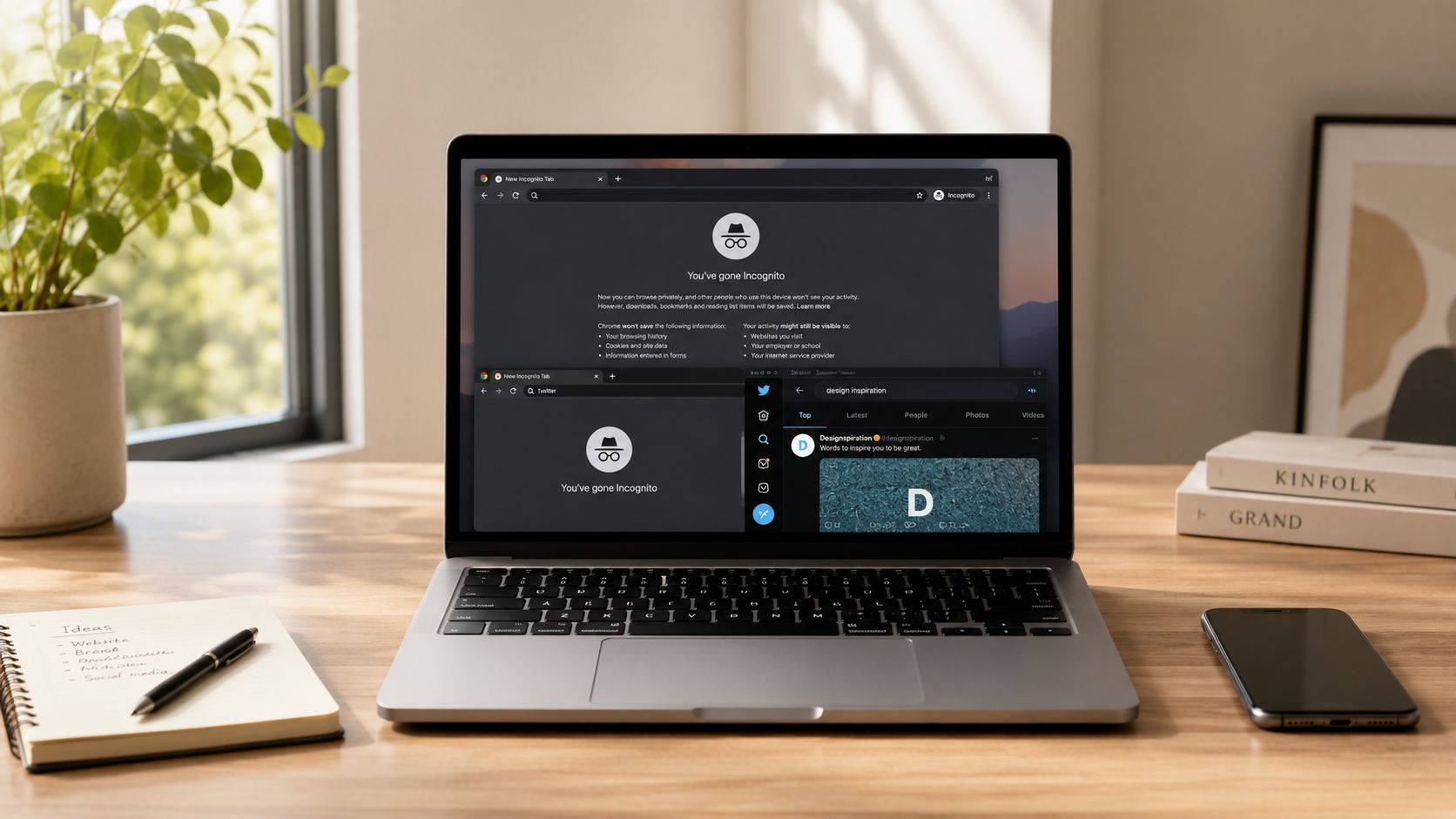
If all of those probes agree, the case for a restriction gets stronger. If only one probe fails, the account may just be experiencing normal surface-specific ranking noise. That's the difference between a reproducible diagnostic and a panic check.
How TweetBoost Can Help
When an account looks underexposed, the first job is diagnosis. The second is deciding whether the problem is visibility restriction, weak audience quality, or plain distribution drift. TweetBoost is relevant when the issue isn't just reach, but the quality and consistency of the audience around the account.
The service positions itself around real, human followers delivered through organic promotion and AI-assisted targeting, with a Day-0 audit, periodic rescans, and a 30-day comparison dashboard. That measurement-first structure matters because a lot of growth providers still sell vague promises instead of evidence. TweetBoost's process is more cautious than that, and it doesn't require client passwords or automatic renewals, which is the kind of operational detail serious teams should care about.
For readers comparing options, the useful resource is the Twitter shadowban test page, which sits alongside the service's broader growth and audit workflow. It's most relevant when the question is not “Can one checker prove a shadowban?” but “How do the account's visibility signals look before and after a controlled change?”
The strongest use case is an account that needs cleaner audience composition and documented delivery, not a magical fix for suppression. The service's appeal comes from its auditable baseline, recurring measurement, and controls around delivery quality. That makes it more relevant to marketers who want to verify movement over time than to people looking for a one-click verdict.
Interpreting Analytics Signals and Account Status Data
A decent probe tells part of the story. A reliable diagnosis comes from pairing that probe with X's native Account Status and analytics. That combination helps separate enforcement from ordinary ranking changes, audience fatigue, or a shift in what the account posts.
Use personal baseline comparisons, not platform-wide averages
The practical benchmark is simple. Pull impressions from the last 7 to 30 days, then compare recent posts against the account's own normal range. If the account shows a broad drop across multiple recent posts, that's more meaningful than one tweet with low reach. A single weak post can be noise. A repeatable cliff is different.
The 2023 Journal of Communication audit is useful here because it showed that shadowban-type sanctions can be measured at population scale, while also reminding practitioners that prevalence varies by cohort. One related analysis estimated shadow-ban-like behavior at 0.50% for one group and 2.34% for another, which is exactly why the account's own baseline matters more than any external average.Audited Twitter suppression patterns and cohort variation
Read Account Status as a signal, not a rumor filter
X's own path, Settings → Your account → Account status, is worth checking early. Recent guides increasingly tell users to review that page alongside impression drops, which signals a shift toward platform-native and quantitative evidence rather than public search alone. When the native status view and the public probes agree, the case gets stronger.
A good interpretation layer distinguishes three situations:
- Enforcement-like decline: multiple recent posts fall sharply, public visibility tests fail, and Account Status signals line up.
- Audience or content drift: impressions slide more gradually, but search and reply surfaces still look normal.
- Ranking volatility: one or two posts dip without a broader pattern, often after topic shifts, posting mix changes, or niche hashtag use.
Decision rule: if the public probes and Account Status disagree, don't force a conclusion. Keep measuring until the pattern is stable enough to trust.
The most useful follow-up is a before-and-after review after a short observation window, not an emotional rerun every hour. For teams that manage publishing calendars, the feed logic article on X algorithm engagement weights becomes relevant, because suppression signals are easiest to misread when the content mix changes at the same time.
The goal isn't to prove the platform guilty. It's to determine whether the account needs a recovery plan, a content adjustment, or more time to normalize.
Mitigation Tactics and Ongoing Monitoring
Once a restriction looks real, the first instinct is usually to post more and “fight through it.” That's the wrong move. A better response is to stop reinforcing the signal, simplify the account's behavior, and watch whether the surfaces recover on their own.

Match the response to the restriction type
Search issues usually call for a cleanup of repetitive behavior, duplicated phrasing, and anything that looks spam-adjacent. Reply deboosting needs a tighter look at thread participation, especially if replies are being posted in bursts or in a templated way. Broader reach suppression often responds best to a pause, a reduced posting cadence, and a return to stable account behavior.
The point isn't to chase every possible cause. It's to reduce the signals most likely to keep the restriction alive. If the account has been posting in bursts, replying in near-duplicate language, or using a narrow set of repetitive prompts, the safest short-term move is to slow down and normalize.
Monitor on a schedule, not emotionally
A useful monitoring rhythm is weekly, not constant. Re-run the same search, autocomplete, and reply-thread probes with the same methodology, then compare the same analytics windows each time. Consistency matters more than frequency because you're trying to observe a pattern, not stare at a screen until it changes.
The first 72 hours after a confirmed restriction should be boring:
- Pause trigger behavior: stop the activity that appears closest to the issue.
- Keep access stable: avoid unnecessary login churn or environment changes.
- Trim repetitive output: no copy-paste replies, no repeated phrasing, no excessive link reuse.
- Watch the surfaces: search, suggestion, reply visibility, and impressions should all be checked with the same method.
What doesn't help is overcorrecting. Deleting and reposting the same thing usually creates more confusion, not less. Chasing a quick engagement spike can also muddy the recovery readout because the account's baseline gets harder to compare.
If the restriction doesn't loosen after a clean period, the best escalation is a support request that includes what changed, what surfaces failed, and what evidence was observed. Vague complaints rarely move anything. Specifics do.
Why Most Shadowban Checker Tools Fall Short
Most consumer tools are still built around a single, narrow assumption. They ask one question, run one search, and hand back a verdict. That feels decisive, but it's usually too thin to trust on its own.
The newer tools are better in one respect, because they admit that search bans, suggestion bans, reply deboosting, and reach limits are separate states. The problem is that many of them still measure those states with proxies. A failed search can reflect ordinary ranking variability, a recent content change, or a niche phrase that isn't easy to isolate. That doesn't mean the tool is useless. It means the output needs interpretation.
A useful framework is to ask what the tool can observe. If it only checks one public surface, it can miss audience-specific restrictions. If it doesn't pair logged-out visibility with thread inspection and analytics trends, it's leaving out the very evidence most likely to separate real enforcement from noise. Recent explainers have started to say this plainly, which is a good sign for the quality of the market.Why one-off visibility checks are only proxies, not proof
The native account view matters again. If X's own Account Status and the external probes align, there's a decent chance the account is dealing with a real restriction. If they don't align, the tool may have caught a temporary ranking oddity instead. The more the content mix changes, the more careful the interpretation has to be. That's exactly why a separate article on AI search tracking tools being unreliable resonates here. A dashboard is only as good as the method behind it.
The right standard for any checker is simple. It should show its work, not just its conclusion. It should use logged-out or outside views, compare more than one surface, and avoid pretending that one failed probe is the whole story. If it can't do that, treat it as a rough lead, not a diagnosis.
If an X account looks suppressed, run the same multi-surface test twice, compare it with Account Status, and keep a written baseline of recent impressions and thread visibility. For ongoing practitioner coverage of platform shifts, diagnostics, and measurement habits that hold up in the field, follow The Keyword and keep the next audit close at hand.
