


You're in the meeting where the dashboards disagree. Paid search says brand terms closed the deal, LinkedIn says it introduced the account, CRM says sales did the heavy lifting, and finance wants one number that doesn't change depending on who's presenting. That's the reason marketing attribution software exists, not to produce prettier reports, but to stop budget decisions from being made on partial truth.
The buyer's mistake is usually the same. They ask which model is “best” before they ask which business question needs answering this quarter. That's backwards. The right stack depends on whether the team needs to optimize campaigns next week, defend budget in the boardroom, or understand whether a channel actually caused lift.
Table of Contents
Why Marketing Attribution Software Exists
A B2B SaaS team shifts 40% of paid search budget into LinkedIn after last-click reports keep handing credit to branded search. The dashboards look cleaner, the pipeline doesn't collapse, and then the CFO asks why spend moved when revenue stayed flat. That meeting is why attribution software became a category instead of a nice-to-have report.

Last click stopped being enough
Single-touch reporting worked when customer journeys were short and visible. It breaks when buyers move through paid social, organic content, partner referrals, retargeting, and branded search over several weeks. By the time the final click happens, the earlier influences are already invisible in the report.
That visibility problem got worse as journeys spread across search, social, video, ecommerce, apps, and CRM-linked touches. Adobe Marketo Measure formalizes this reality with First Touch, Lead Creation, Opportunity Creation, and Closed Won, which shows how attribution moved from counting leads to linking marketing activity to revenue outcomes Adobe Marketo Measure. The broader market growth tells the same story, attribution has shifted into a core measurement layer, with one estimate placing the market at USD 4.74 billion in 2024 and projecting USD 10.10 billion by 2030 Grand View Research.
The software answers a measurement problem
Attribution software joins exposures to outcomes across channels, then applies a consistent credit rule. That matters because a human analyst can't reliably stitch together every touchpoint by hand once ad platforms, CRMs, and offline sources all hold part of the picture. The point isn't to crown a winner, it's to create a defensible way to compare channels on the same page.
The category also grew because the old path from ad click to conversion got fractured. Walled gardens protect their own data, devices don't behave like a single identity, and browser tracking keeps getting weaker. In practice, marketers need a system that can combine what's observable, reconcile it to revenue, and show where the journey is partially hidden instead of pretending the path is complete.
Practical rule: treat attribution software as a decision support system, not as a verdict machine.
The rest of the purchase question comes down to four things. Which model fits the decision, which features actually matter, which vendor can support the workflow, and which governance controls keep the finance team confident in the numbers.
What Marketing Attribution Software Actually Does
A real marketing attribution platform does more than display channel dashboards. It ingests data from ad networks, web analytics, CRM systems, and offline sources, resolves identities across sessions and devices, runs those interactions through a credit-allocation model, and pushes the result back as a performance view that ties to revenue. If a tool only reads native ad-platform data, it's reporting, not attribution.
The five parts that matter
The first layer is data ingestion. Connectors pull in spend, clicks, conversions, CRM events, and sometimes offline transactions. Without that layer, the rest of the system has nothing to work with, and every missing connector becomes a blind spot in the journey.
Next comes identity resolution. Good platforms use deterministic matching where they can, probabilistic matching where they must, and household stitching when the buying process spans multiple people. That matters because the software can't assign credit correctly if it can't recognize that two sessions belong to the same buyer or account.
Then comes the modeling layer. Here the platform applies rules-based logic like linear or position-based models, or algorithmic approaches that infer contribution from observed paths. The model is the assumption set. It's not the truth itself.
The fourth layer is the reporting interface, where marketers explore paths, compare channels, slice by campaign, and inspect creative. The best UI doesn't hide the model, it shows how the result was produced. That transparency is what separates a trustworthy tool from a polished black box.
The fifth layer is activation. Some platforms push audiences, conversion data, or budget recommendations back into ad platforms, CRM tools, or data warehouses. That's where measurement starts influencing action instead of sitting in a dashboard nobody uses.
Where it overlaps and where it doesn't
Attribution software overlaps with media mix modeling, incrementality testing, and broader marketing mix analytics, but it doesn't replace them. MTA looks at journeys at a more granular level, MMM looks at aggregate response and survives privacy loss better, and incrementality testing checks whether a channel actually created lift. The right buying decision depends on which question needs a defensible answer first.
A platform that only reports on clicks is not enough. A platform that connects data, resolves identity, explains the credit rule, and supports downstream activation is the one worth evaluating.
Attribution Models Compared and Their Trade-Offs
The model is not a cosmetic choice. It changes the budget recommendation. Two platforms can ingest the same data and still tell a leadership team to move spend in opposite directions because the credit rule is different.
The main models buyers actually see
| Model | Credit Rule | Data Requirement | Channel Bias | Best-Fit Decision |
|---|---|---|---|---|
| Last Click | 100% to the final touchpoint | Basic conversion path data | Over-rewards lower-funnel, branded, and retargeting channels | Fast conversion reporting |
| First Click | 100% to the first touchpoint | Basic path data | Over-rewards awareness channels | Top-of-funnel discovery |
| Linear | Equal credit to every touchpoint | Multi-touch paths | Smooths over real influence differences | Broad channel comparison |
| Time-Decay | More credit to touches closer to conversion | Timestamped multi-touch paths | Favors recent interactions | Shorter buying cycles |
| Position-Based | More credit to first and last touches, less to middle | Path data with ordered events | Rewards entry and close, underweights nurture | Funnel-stage evaluation |
| W-Shaped | Credit to first touch, lead creation, opportunity creation, then the rest | Longer B2B-style journeys | Favors milestone events in CRM-heavy funnels | Pipeline attribution |
| Data-Driven Algorithmic | Credit inferred from observed paths and model behavior | Large enough clean data set | Still limited by what is instrumented | Relative contribution within tracked channels |
Last click is simple and usually wrong for budget allocation. First click is better for awareness but can overvalue the channel that started the journey and ignore the channel that finished it. Linear is fair on paper and often too flat in practice. Time-decay and position-based models are more realistic for many teams, but they still hard-code assumptions about influence.
W-shaped models make sense when the funnel has obvious CRM milestones, especially in B2B. Data-driven models are attractive because they sound more objective, but they still inherit the same visibility limits from the tracking layer. If the path is incomplete, the model can only optimize the path it sees.
MTA, MMM, and incrementality each solve a different problem
Multi-touch attribution is strongest when the team wants fast, granular reads on journeys already being tracked. It's weakest when cookie loss, app restrictions, or walled gardens hide too much of the path. MMM is slower and less granular, but it survives privacy change better because it works at the aggregate level.
Incrementality testing is the causal check. It answers whether a campaign or channel actually added lift. That's why many senior decision-makers trust it most, with 60% saying they trust independent incrementality testing more than other measurement methods, compared with 40% for media mix modeling and 37% for in-platform reporting Digital Applied.
For teams exploring open-source MMM, Google's Meridian is a useful reference point, especially when the internal data science team wants a framework to build on Google Meridian overview. The right choice is still driven by the decision at hand, not by ideology about one methodology “winning.”
Practical rule: use MTA for tactical allocation, MMM for planning, and incrementality when the spend move is big enough to justify causal proof.
Core Features and Integrations That Matter
The feature checklist should start with data quality, not dashboards. A platform can look polished and still fail if it can't stitch offline conversions, respect consent, or reconcile CRM revenue to ad-platform spend. That's why the buyer should inspect the plumbing before the UI.
The non-negotiables
Identity resolution is the first filter. Deterministic matching, probabilistic stitching, and household-level resolution all matter, but the platform should also explain which method was used and where uncertainty remains. If the vendor can't describe that clearly, the output is too opaque for budget decisions.
Integrations matter just as much. Native connections to Meta, Google, and TikTok are table stakes, but the platform also needs CRM, ecommerce, and offline sources where relevant. Server-side tagging and offline conversion uploads matter because browser-side pixels miss too much of the journey now.
Reporting depth is the third requirement. Buyers should look for customizable models, path exploration, cohort views, and API access for downstream warehouse work. A dashboard that only shows aggregate ROAS is not enough for a team that needs to debug paths or defend spend.
Governance is part of the product
Audit trails, role-based access, and consent-aware event capture are not enterprise extras. They're what make the measurement believable enough for finance, legal, and operations to sign off. If the platform can't show how credit was assigned, the buyer is left with a number and no evidence.
The Keyword has covered how GA4 benchmarking data fits into the broader analytics stack for businesses comparing performance GA4 benchmarking data coverage, but benchmarking alone doesn't solve attribution. It tells teams how they compare, not how credit should be assigned across a journey.
| Feature Area | What to Look For | Red Flag |
|---|---|---|
| Identity Resolution | Deterministic and probabilistic stitching, plus a clear explanation of match quality | “Proprietary” matching with no method disclosure |
| Data Ingestion | Native connectors for ad, CRM, ecommerce, and offline sources | CSV-heavy workflows and manual uploads |
| Modeling Layer | Ability to inspect and compare models | One fixed model with no transparency |
| Reporting Depth | Path analysis, cohorts, APIs, and exportable raw data | Pretty charts with no drill-down |
| Governance | Audit logs, RBAC, consent controls, and data residency clarity | No traceability for credit assignment |
The buyer should reject any platform that acts like a UTM wrapper with better branding. If it can't join data cleanly, it can't earn trust.
How Cometly Can Help
Cometly makes sense for teams that need a practical attribution layer without stitching together a stack from scratch. Its value is in unifying touchpoints, connecting website and CRM data, and pushing conversion data back into ad platforms so budget decisions are based on more than platform-native reporting. For teams evaluating fit, Cometly's marketing attribution platform is worth reviewing alongside the rest of the shortlist.

Where it fits
Cometly is strongest for teams that want multi-touch attribution, server-side tracking, and one-click conversion sync without a long implementation cycle. It also helps when organic, paid, email, and outbound all need to live in one reporting view, because that's often where internal debates start. The platform's AI-assisted features are useful only if the underlying data is clean, so the first evaluation should still be about tracking quality and integration coverage.
The practical reason to consider it is speed to usable reporting. If a team is losing weeks to manual cleanup, disconnected dashboards, and duplicated conversions, a platform that reduces setup friction can create value quickly. That said, speed should not be mistaken for proof, and no attribution platform can turn partial tracking into causal certainty.
How to score it against alternatives
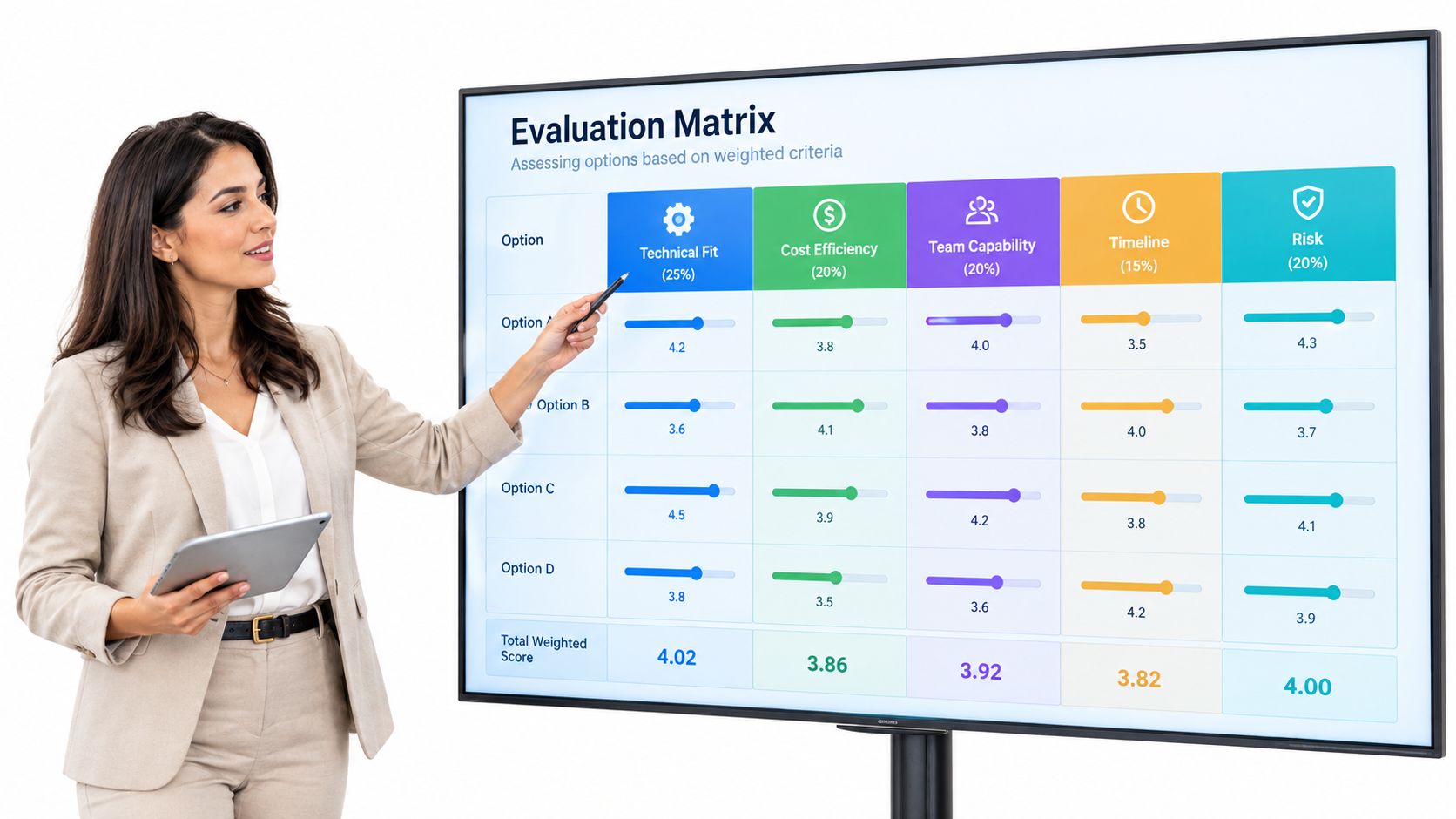
A shortlist should score vendors against five criteria, weighted to the business's priorities:
- Method coverage: Does it support MTA, MMM, or incrementality workflows where needed?
- Data connectivity: Does it connect to the actual source systems in use?
- Transparency: Can the team inspect how credit was assigned?
- Activation: Can it push decisions back into the buying stack?
- Total cost of ownership: Does implementation service create hidden overhead?
Cometly is a reasonable fit when a team needs usable attribution fast, already has a clear source-of-truth stack, and wants to reduce reliance on manual reconciliation. It is less suitable if the decision requires deep causal modeling or broad MMM-style planning.
A Buyer's Evaluation Framework for Shortlisting Vendors
The wrong way to buy attribution software is to let the demo define the scorecard. Vendors are good at storytelling. Finance teams are good at asking what was proven. The scorecard should be written before the first call.
Score the decision, not the pitch
A practical framework uses five weighted dimensions. Methodology coverage should score whether the platform can support MTA, MMM, or incrementality, depending on the decision. Data connectivity breadth should reflect the actual source systems in use, not just the vendor's marketing deck.
Model transparency matters more than flashy visuals. If the team can't explain the credit rule to finance, the software will create more friction than clarity. Ease of activation should measure whether outputs can influence budget, audience, or reporting workflows without a manual export chain.
Total cost of ownership should include implementation services, internal analyst time, and the maintenance burden after go-live. A cheaper license can still become the expensive option if the team needs six months of engineering help to make it useful.
Use a pilot, not a promise
The shortlist should come from analyst lists, peer references, and internal use-case fit. Then each finalist should run a paid pilot against a single quarter of historical data and a known business event, like a product launch or channel change. That gives the team a controlled way to compare outputs against something the business already understands.
The video below is useful for aligning stakeholders on what a structured evaluation should look like before anyone starts arguing over dashboards.
Shortlist rule: if a vendor won't explain how its model behaves when data gets messy, the platform isn't ready for a serious budget owner.
Red flags are easy to spot once the scorecard exists. Black-box scoring, opaque data residency, and contracts that hide attribution logic behind a higher feature tier should all slow the deal down. If the team can't see how the software works, it shouldn't trust it with spend decisions.
When Attribution Outputs Mislead and How to Fix That
Attribution reports are not causal proof. They show association between touchpoints and conversions, not true lift. That distinction matters because the channels customers already favor often get more credit merely because they appear more often in the path.

Where the bias comes from
Selection bias is the common trap. High-intent users click branded search or retargeting because they were already close to buying, and the model may give those channels more credit than they deserve. That doesn't mean the software is broken, it means the buyer is asking it to answer a causal question it wasn't built to settle on its own.
The fix is to pair MTA with incrementality testing. Geo experiments, holdout tests, and PSA caps can show what would have happened without the campaign. That is the cleanest way to separate what correlated from what actually changed outcomes.
How to use each method properly
MTA should handle short-term optimization within known channels. MMM should handle annual planning and broader budget framing. Incrementality tests should be triggered whenever a reallocation is large enough to change business risk, especially when the move would shift meaningful spend across channels or audiences.
That split keeps teams honest. Attribution can still guide day-to-day decisions, but it shouldn't be used to claim certainty where the data environment doesn't support it. A platform that encourages that distinction is better than one that pretends every report is a final answer.
Practical rule: if the spend shift is material, test it. If the decision is routine, optimize with attribution. If the planning horizon is broad, use MMM.
Implementation Roadmap and Common Pitfalls
A clean rollout starts with the data, not the vendor. The team should audit every source, confirm consent state, and align revenue definitions with finance before a single report is trusted. If those basics are fuzzy, every downstream chart will be debated.
A realistic rollout sequence
Start by mapping the priority channels and their connected systems. Sequence integrations by business importance, not by whatever is easiest to connect. The channels that drive the most spend or the most disagreement should go first.
Then set a 60-day validation window against a holdout or control. That gives the team enough time to compare attribution behavior against a real business event and catch obvious mismatches before the model becomes the default source of truth. Only after that should the team broaden reporting access.
Pitfalls that slow adoption
The biggest failure mode is stitched events without identity resolution. Another is mismatched conversion windows, where marketing and sales are measuring different outcomes and arguing about the wrong number. A third is letting first results become truth before the team has tested them against reality.
Training matters too. If sales, finance, and marketing don't share the same definitions, the software will surface disagreements faster, not solve them. That can still be useful, but only if leadership expects the disagreement and plans for it.
The market is also moving under the buyer's feet. Tracking loss from privacy changes, fragmented devices, and AI-driven discovery means the stack has to handle more blind spots than it did two years ago. A rollout that assumes perfect tracking will fail in practice.
Privacy, AI Search, and the Road Ahead
The next buying cycle will be shaped by signal loss, consent rules, and AI-driven discovery. Browser tracking is weaker, data-residency expectations are tighter, and the journey now starts in places that traditional pixel-based stacks don't fully see. Buyers need tools that can operate with incomplete paths and still produce usable direction.
The Keyword's coverage of Google's decision to drop its plan to phase out third-party cookies in Chrome captures one part of that uncertainty Google cookies coverage. The broader point is that privacy turbulence isn't ending, so measurement strategies can't depend on one tracking assumption surviving forever.
What to prioritize next
Platforms should have a first-party data strategy, server-side ingestion, and model-based measurement that doesn't collapse when pixel data gets thinner. Clean-room collaboration helps when collaboration needs to happen without exposing raw user data. Incrementality testing should sit beside attribution, not after it.
The buyer should also pressure vendors on AI-discovery blind spots. If a journey starts in an AI interface, moves through a walled garden, and ends outside the browser, attribution has to account for that path without pretending the clickstream is complete. The best platforms won't claim perfect visibility, they'll show where the gaps are.
The decision framework is simple. Buy for the question that matters now, not the model that sounds smartest in a demo. Require transparency, test against reality, and treat credit allocation as an input to judgment, not the final word.
If the team is evaluating marketing attribution software this quarter, the next step is to build a weighted scorecard, run a pilot against one historical quarter, and compare the vendor output to a known business event before signing anything. Book a shortlist review with marketing, finance, and operations in the room, then insist on a model explanation that can survive a CFO question without hand-waving.