









LinkedIn is expanding its AI-powered conversational search to all users in the U.S. The company first launched the AI-powered people search feature to Premium U.S. subscribers in November last year. The update moves the feature beyond its earlier limited release and places it directly into the hands of a broader user base.
The feature changes how search works on LinkedIn. The company says the goal is to shift search from rigid keyword matching to a more flexible, intent-based approach.
How the Search Works
According to LinkedIn, the system uses AI to understand context, not just words. When a user enters a query, it breaks down the request into key elements such as skills, job titles, industries, and experience levels. It then matches those signals with profiles, job listings, or content across the platform.
Instead of combining keyword filters, industry, and title dropdowns, members describe the person they are looking for in natural language. LinkedIn's system reads the intent of the query and returns profiles whose experience and skills match that intent, rather than profiles that happen to contain the literal words typed.
For instance, a member searching for "people who co-founded a productivity startup and are based in New York" gets a list of profiles ranked by how well each person's actual career history matches the description, rather than profiles that contain the phrase "productivity startup."
Search Recommendations and Insights
LinkedIn is also introducing updated search recommendations and insights. According to the company, the system suggests adjustments based on the initial query, allowing users to adjust their searches without starting over. For example, after entering a broad request, users may see prompts to narrow results by skills, industries, or experience levels.
The recommendations and insights includes flexible matching, which lets members type partial information, a nickname, or a misspelling and still see relevant results. The platform is also adding personalized search suggestions, which adapt to the member's profile and past search activity. Users will also see inline verification badges appearing directly in search results even while they are typing.
LinkedIn will roll out this update over the coming months.
AI-generated Profile Summaries in Search Results
LinkedIn has also added AI-generated profile summaries within search results. Search results now include a short AI-generated summary under each profile explaining why that person surfaced for the query. According to LinkedIn, the summary references signals such as a past employer or school shared between the profile and the member running the search.
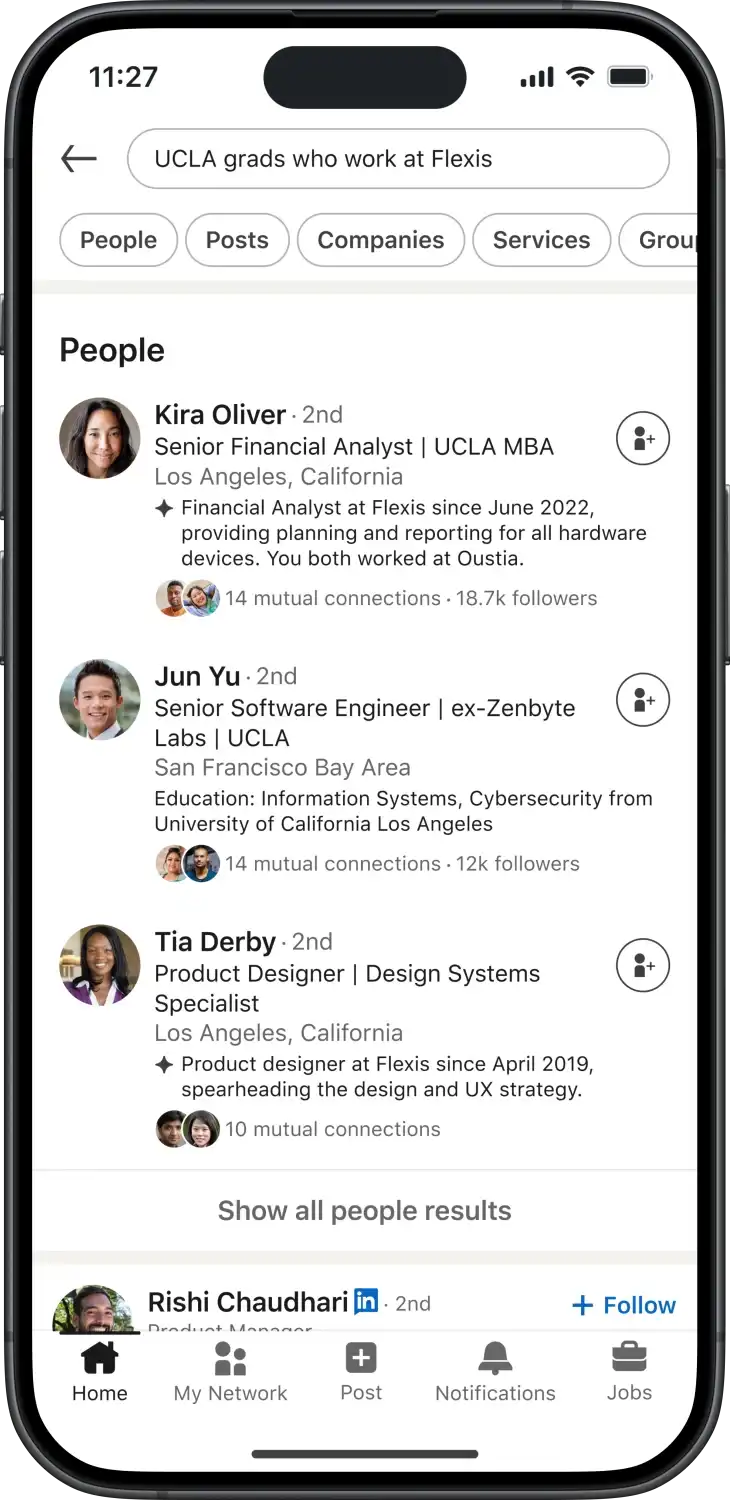
When users browse through candidates or profiles, they can see a short summary that highlights key experience, skills, and roles. The company explains that these summaries are generated from the information on a user’s profile. Instead of opening each profile individually, users can scan these summaries to decide which results are relevant.
How It Fits the Wider Search Shift
Natural-language search has moved from Google and OpenAI's surfaces into vertical platforms over the last year. Google has AI Mode and AI Overviews running across Search. OpenAI has ChatGPT search, with location-aware results layered in more recently. Pinterest and Amazon have both pushed conversational search into their own apps.
However, LinkedIn's position is different: its index is a professional graph covering people, companies, skills, and employment history, not the open web. Opening conversational search to all U.S. members lets members query that graph the same way they already query ChatGPT or Gemini.
Recap
How does LinkedIn's AI people search work?

Instead of filtering results by keyword, title, and industry, members describe the person they are looking for in natural language. LinkedIn's system reads the intent of the query and returns profiles whose experience and skills match that intent, rather than profiles that happen to contain the literal words typed. When AI-generated profile summaries are shown, each result also includes a short explanation of why that profile surfaced, referencing signals such as a past employer or school shared with the member running the search.
Who can use AI-powered people search on LinkedIn?
According to LinkedIn, AI-powered people search is now rolling out to all U.S. members. The feature has been available to U.S. Premium members since fall 2025; extending it to free accounts opens the same capability to every U.S. member. LinkedIn has not shared a timeline for markets outside the U.S.
What else is changing in LinkedIn search?
LinkedIn says three related changes are rolling out over the coming months. Flexible matching lets members type partial information, a nickname, or a misspelling and still see relevant results. Personalised search suggestions adapt to a member's profile and past search activity. Verification badges will also appear directly in search results while the member is typing, before the member clicks through to a profile.