

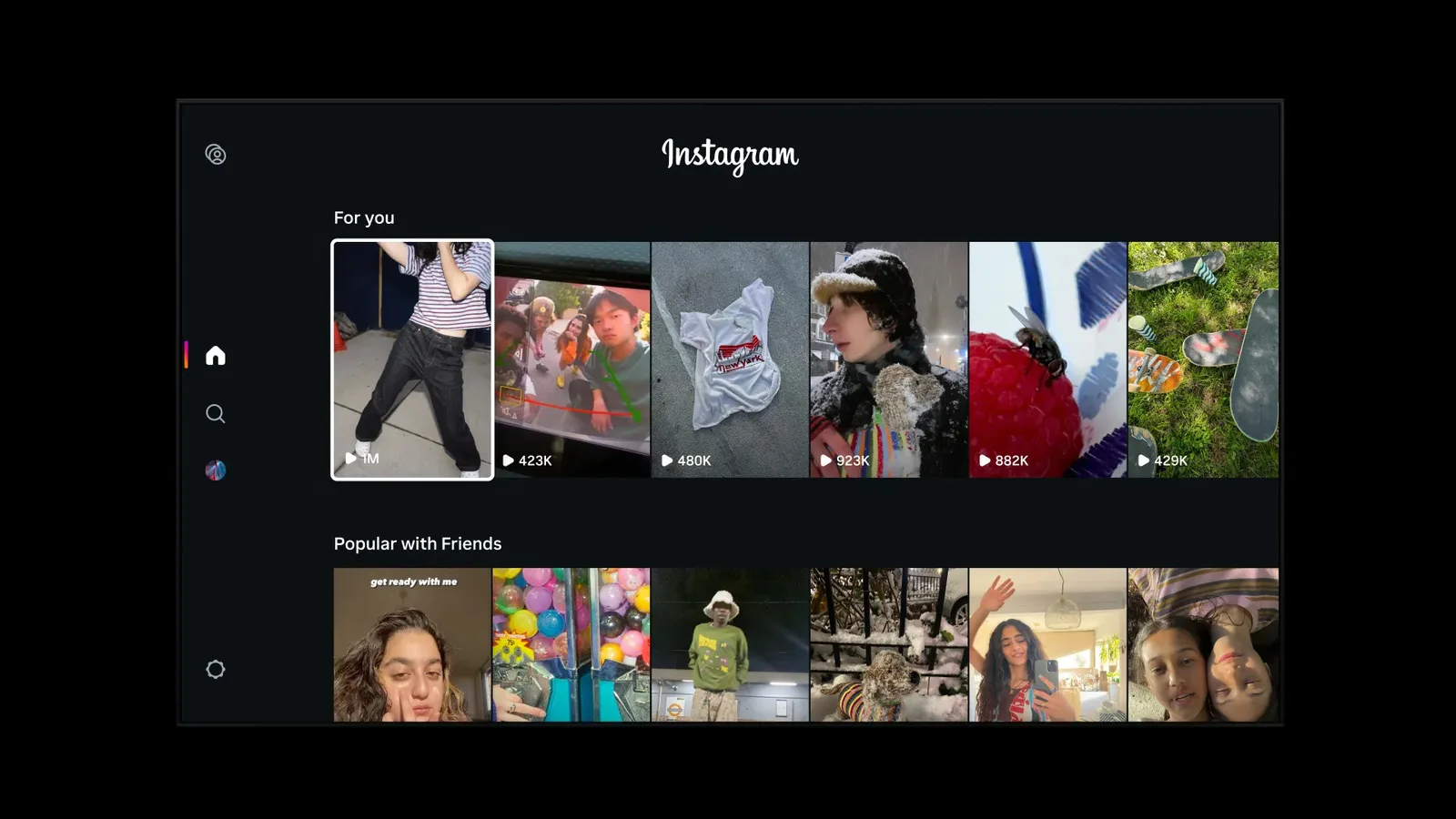


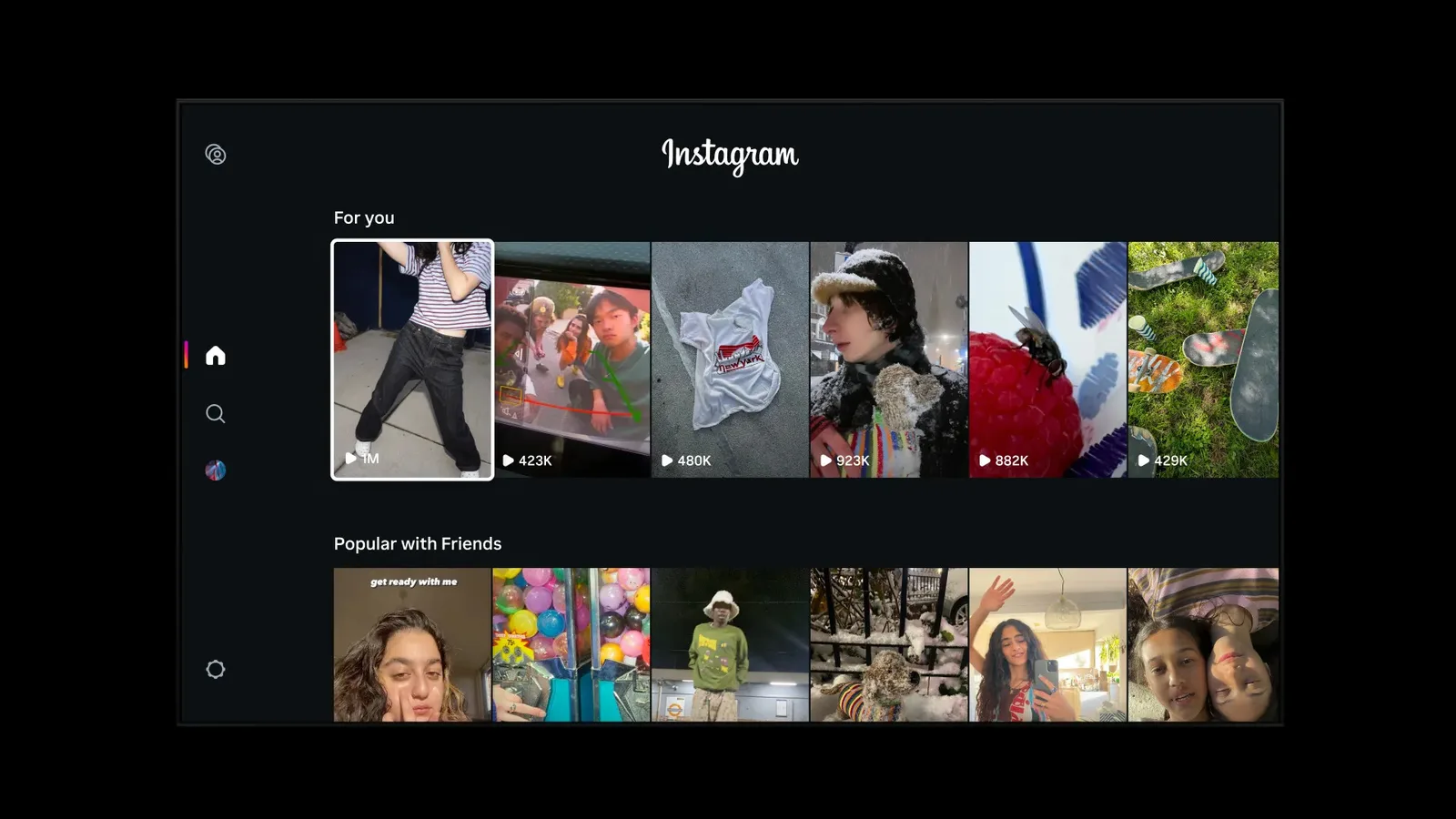



On Tuesday last week, Instagram announced it had begun testing a new Instagram app for TV screens. According to the announcement, the app will roll out in the U.S. on Amazon Fire TV devices, allowing users to watch Instagram Reels on a large screen in the living room. The app is expected to launch on Tuesday.
The test expands Instagram beyond its mobile roots, where Reels have primarily been consumed through individual, vertical scrolling. On TV, the experience shifts toward shared and passive viewing, a setting that traditionally favors long-form video and scheduled programming.
Meta has detailed how the TV app is expected to function. These product details provide context for how Instagram's chief, Adam Mosseri, in the Mixed Signal Podcast interview with Semafor, explained the company’s thinking behind the move, including what Instagram hopes to learn as it tests whether short-form video can translate to television screens and how the move fits into Instagram’s broader strategy as competition for TV attention intensifies.
How Meta says the TV experience will work
According to Meta, the TV app centers on Reels discovery. Viewers can search for creators, browse profiles that focus on short-form video, and explore content based on interests. The company said Reels on TV will be grouped into channels that match users’ interests, including new music, sports highlights, hidden travel gems, and trending moments.
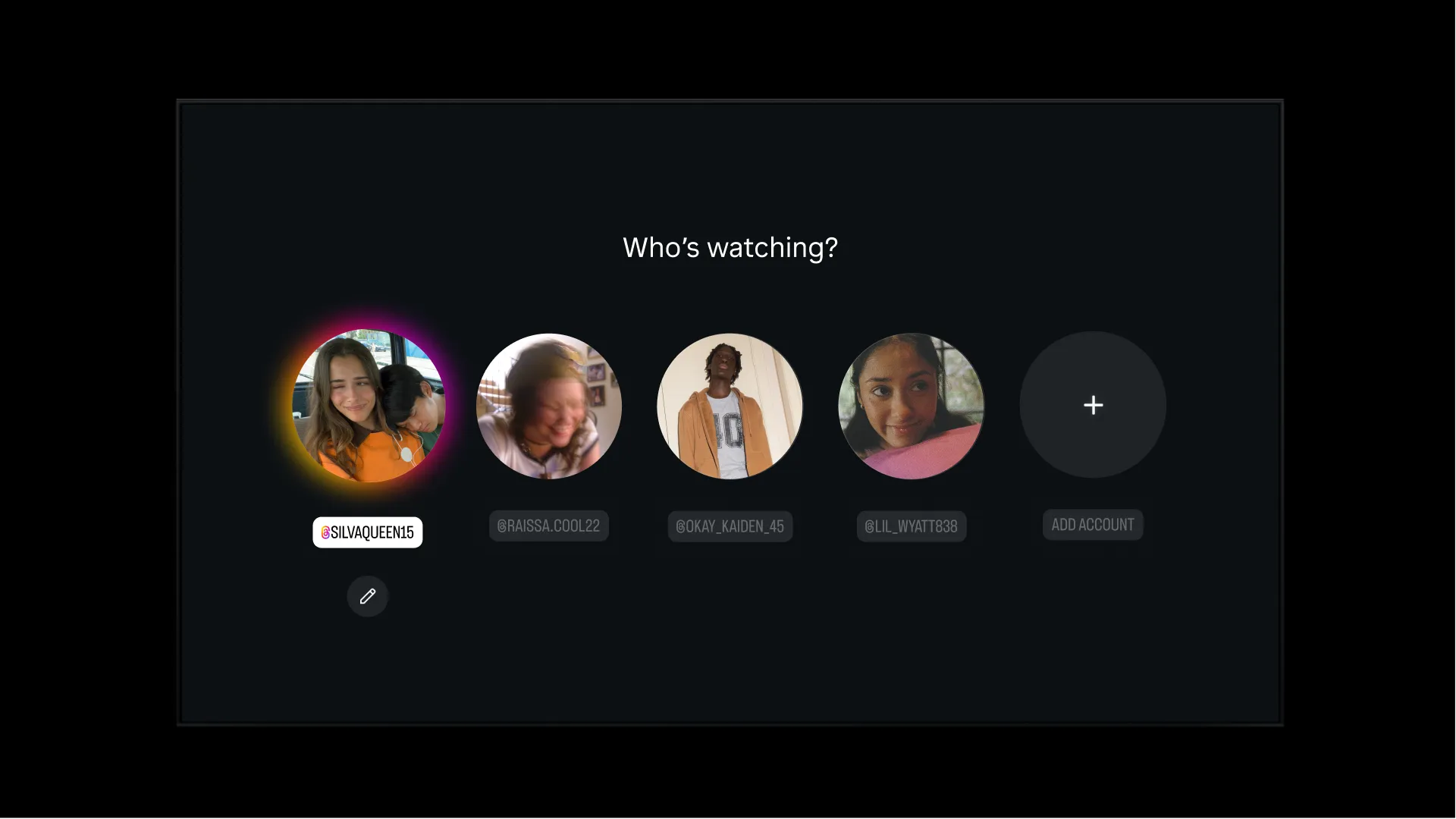
On the homescreen, users will see horizontal collections of videos they can browse. Once they click on the thumbnail, they can explore the full portrait video. The app will allow up to five accounts to be logged in on one television, which the company says supports personalized viewing within a shared household environment.
Instagram explained that the TV app is built for watching. There are no tools for filming, editing, or uploading content from the television. Instead, the interface is designed to stream Reels continuously, with navigation tools for viewers move between creators and topics. Meta said it may later introduce features such as using a phone as a remote control and adding a more structured way to move through content categories.
Mosseri explains Instagram’s direction on TV
Ahead of the rollout, Instagram chief Adam Mosseri explained that the company is still learning how people might use Instagram on TV screens. He said viewers may begin by watching Reels passively, similar to how short videos are consumed on other TV platforms. “Maybe people will start by watching Reels passively,” Mosseri told Semafor, adding that some users may also use the TV as a shared screen to explore and discuss content with others in the room.
Mosseri said the company is approaching the launch as a learning process rather than a finished product. “We’re going to learn a lot,” he said. “I’m sure we’ll get a bunch of things wrong, but we’re going to iterate quickly.” He said the company expects the test to surface clear signals about what works and what does not in a living room setting. Instagram plans to use those signals to refine the experience over time, rather than assuming that mobile viewing habits will translate directly to TV.
He also framed the TV test within Instagram’s broader evolution as a platform. Mosseri said Instagram has had to repeatedly adapt as user behavior changes, from its early focus on photo sharing to algorithmic feeds and short-form video discovery. The move into television, he said, is another attempt to test where Instagram fits as screens and viewing habits continue to shift.
Competing with YouTube and TikTok for TV attention
Instagram’s move into TV places it more directly alongside YouTube, which has become one of the most-watched platforms on connected TVs. YouTube has increasingly pushed creators and media companies toward longer videos that resemble traditional television content. The platform recently rolled out a redesign of its TV app.
But Mosseri said Instagram’s approach remains different. Unlike YouTube, Instagram focuses on short-form videos. Long-form content does not currently perform well on Instagram, where variety and shorter viewing sessions define the experience. However, the company is open to revisiting that position if television viewing changes what works on the platform.
TikTok also remains a central point of comparison. Instagram’s focus on Reels was shaped in part by TikTok’s success with short-form video discovery. Now, as platforms compete beyond phones, both are testing how their formats translate to larger screens.
A broader shift across digital media
Television screens have become a key battleground for digital video platforms as streaming continues to replace traditional broadcast viewing. Instagram’s TV test signals interest in understanding whether short-form video can hold attention in that environment. Instagram’s TV experiment also reflects a wider convergence across digital platforms. Short-form video reshaped social feeds, while YouTube’s success on CTVs has pushed other platforms toward the living room.
At the same time, podcasts are appearing on streaming video services, and audio platforms are investing in video formats. Netflix, for instance, has partnered with iHeartMedia to bring more than a dozen video podcasts exclusively to its streaming service in early 2026. Spotify has been pushing deeper into video podcasting.
As platforms compete on the same screens, maintaining a clear identity becomes harder. Mosseri said Instagram’s mission has remained consistent even as the ways people connect, create, and consume content continue to change. The TV app is the latest test of how far that mission can stretch, as Instagram evaluates what role it can play beyond the phone.