








Google is expanding Personal Intelligence to all free U.S. users with personal Google accounts, less than two months after the feature launched for paid subscribers in January 2026. According to Googles Blog post, the update extends access across three surfaces: AI Mode in Search, the Gemini app, and Gemini in Chrome. The feature is opt-in and does not extend to Workspace business, enterprise, or education accounts.
What Personal Intelligence does
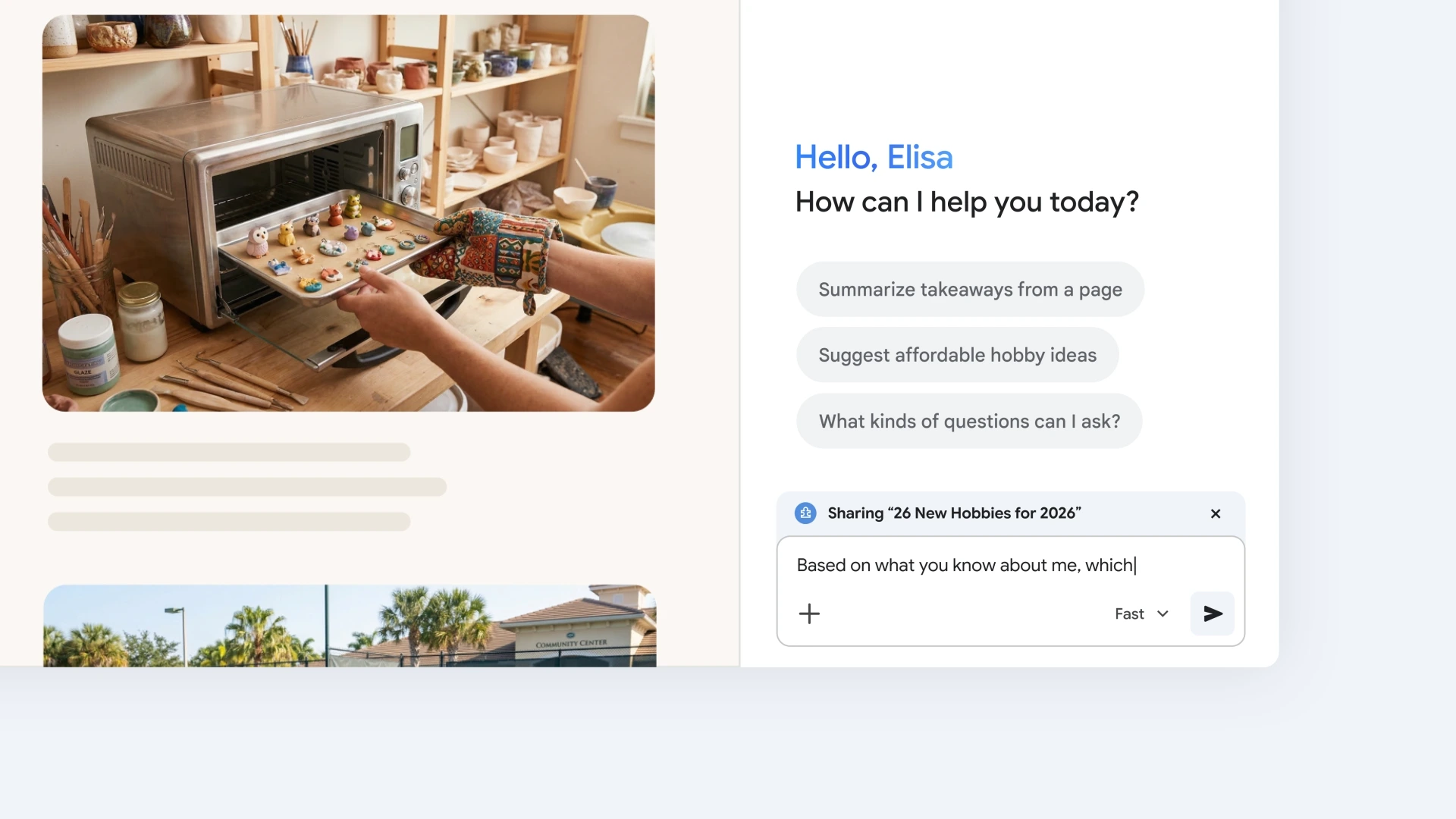
Personal Intelligence connects Gemini to a user's Gmail, Google Photos, and other Google apps to deliver responses grounded in personal context. Use cases include shopping recommendations based on purchase history in Gmail, tech support that accounts for the user's specific device model, and travel planning that draws on booked flights and past trip photos. The feature is off by default and requires users to opt in, with per-app controls to disconnect any service at any time.
What Google says about data use
Google has clarified that Gemini does not train directly on Gmail or Google Photos data. The system draws only on the specific prompts a user submits and the responses generated from those prompts within the service, not the underlying data in connected apps.
That distinction matters for adoption. Google's explicit separation of "using context to answer a question" from "training on your inbox" is central to its public case for the feature. Users can see when personal context has been used and can revoke app access at any time through their Google account settings.
Why the free rollout came quickly
Google moved Personal Intelligence from paid-only to free for all U.S. users in roughly seven weeks. That timeline suggests the company is prioritizing scale of adoption over subscription revenue from this feature, consistent with its broader pattern of growing Gemini's user base before monetizing it.
Earlier this month, Google SVP Nick Fox described how Personal Intelligence might eventually intersect with advertising as "TBD," adding that private information would remain private but that ad targeting could be "contextually consistent." The broad free-tier rollout extends the potential scale of any future intersection considerably.
How Google compares to competitors
No other major AI platform currently combines the breadth of Google's personal data access for free users. Apple's Siri personalization draws on on-device signals but has been delayed repeatedly; a broader rollout may not arrive until late 2026. Microsoft Copilot accesses Microsoft 365 data primarily for enterprise accounts, not a consumer inbox equivalent. OpenAI's ChatGPT memory feature stores context users provide manually but cannot access a Gmail inbox or photo library. None of those platforms link the range of apps Google connects: Gmail, Photos, Calendar, Maps, YouTube history, and Search activity, all under a single free account.
What advertisers should watch
Google has not announced how Personal Intelligence data will influence advertising. Nick Fox's "TBD" response on ad targeting leaves the intersection undefined. But the free-tier rollout at scale, combined with the depth of connected data, means the potential targeting surface is significant if Google incorporates it into future ad products. Advertisers testing formats in AI Mode remain in the environment most likely to see those experiments first.

Eli on what Google’s move toward Personal Intelligence means for creators, marketers, and businesses.
“If you're a content creator, you're no longer competing for one ranking. You're competing to be relevant in millions of personalized contexts. The question can't be "how do I rank?" anymore. It's "how do I become valuable enough to the most amount of people that the AI pulls me into everyone's personal results?"
“If you're a marketer, personalization just went nuclear. Your audience segmentation strategy needs to account for AI that already knows your prospects better than you do.”
“If you're a business owner, brand trust matters more than EVER. When AI pulls from personal data to recommend solutions, it's going to favor sources that align with user history and preferences. You need to be embedded in your customers' digital lives.”

Recap
What does Google Personal Intelligence do?

Personal Intelligence connects Gemini to a user's Gmail, Google Photos, and other apps for context-aware responses — covering shopping recommendations based on purchase history, device-specific tech support, and travel planning drawn from booked flights and past trips. The feature is opt-in and off by default, with per-app controls to disconnect any service.
Does Google use Gmail data to train Gemini?
No. Google states Gemini does not train directly on Gmail or Google Photos data. It draws only on the specific prompts submitted and responses generated within the session. Users can disconnect any app at any time through Google account settings.
Is Personal Intelligence available to Workspace users?
No. The feature is currently limited to free personal Google accounts in the U.S. Business, enterprise, and education Workspace accounts are excluded. Google has not announced a timeline for Workspace access.

 Free tool · Meta Ad Library