




Meta has launched Vibes, a new feed for users to create and share short-form AI-generated videos. At launch the company described it as part of the next version of the Meta AI app and confirmed that it was also available on meta.ai.
The Vibes feed shows full-screen AI-generated videos. As people browse, they can view clips from creators and communities and interact by creating their own versions. Meta says the experience will become more personalized as users spend more time with the feed.
Creating and remixing AI videos
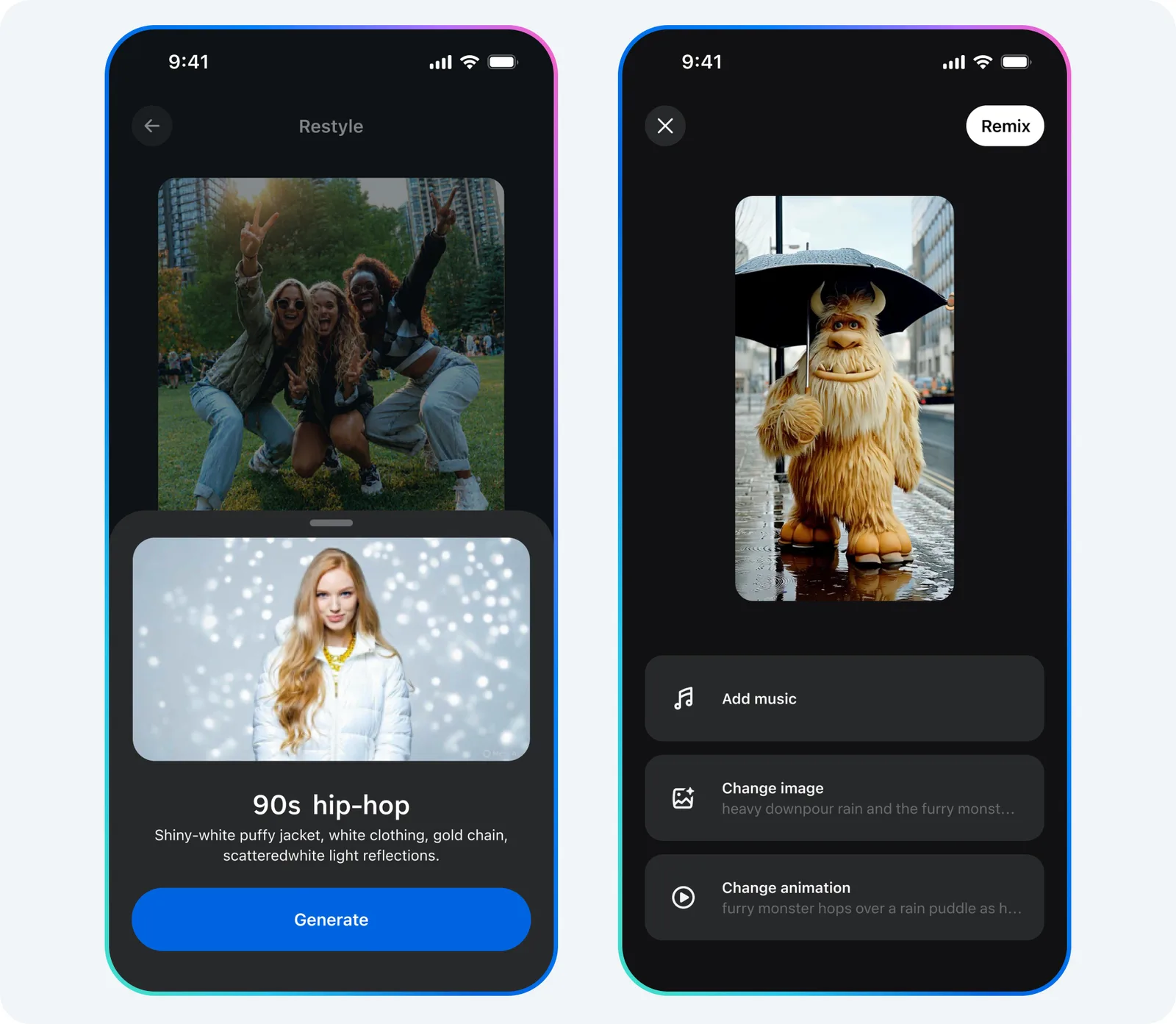
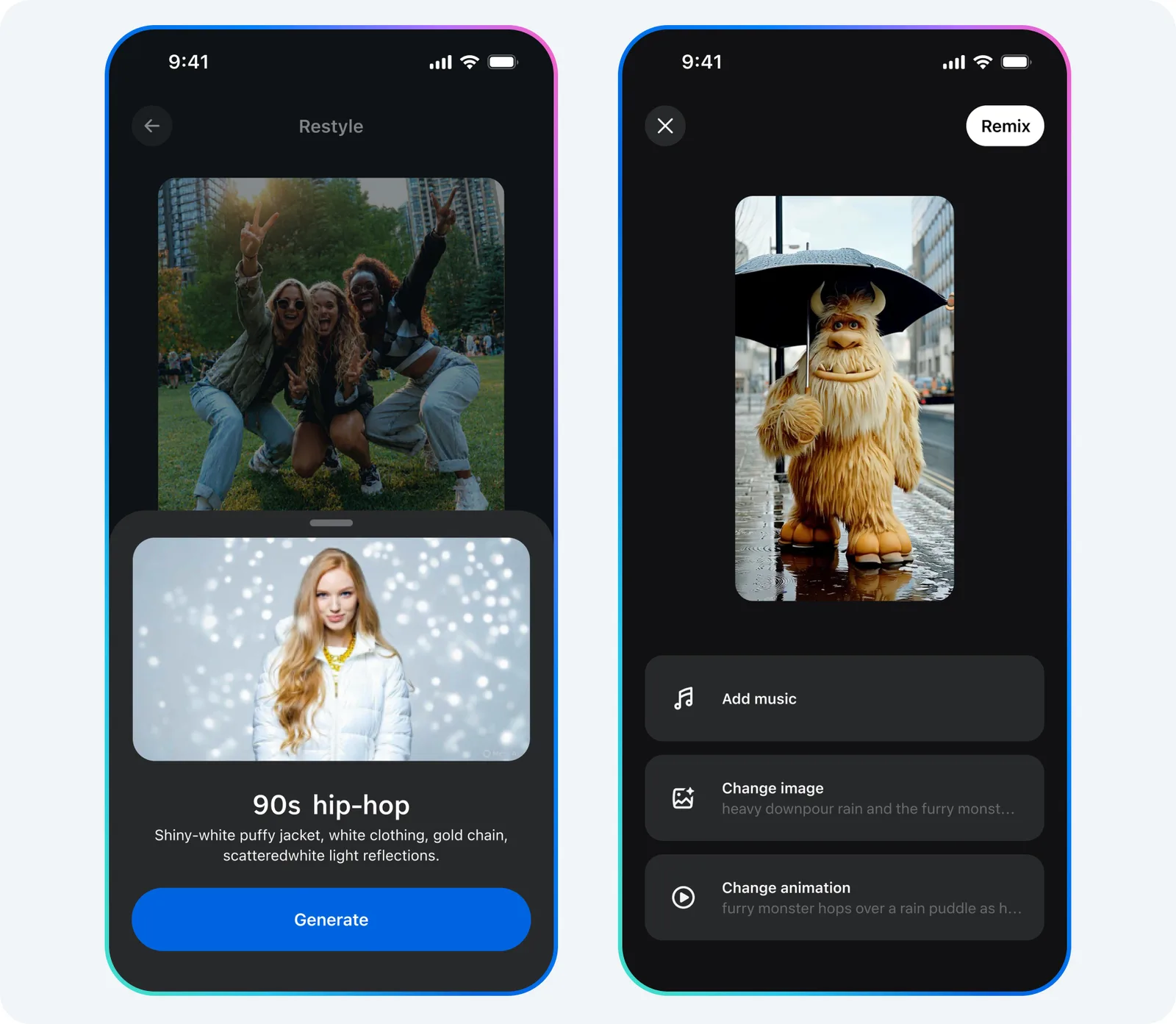
According to Meta, Vibes is built to give users three main ways to generate content. Users can create a video from scratch, upload content they already have, or remix an existing video from the feed. The tools allow them to add visuals, layer music, and adjust video styles.
The company explains that once a video is ready, it can be shared directly to the Vibes feed, sent in a direct message, or cross-posted to Instagram and Facebook Stories and Reels. If a user sees an AI video on Instagram, they can tap through to remix it in the Meta AI app.
Partnerships behind the early version
Alexandr Wang, Meta’s chief AI officer, said in a post that Meta has partnered with AI image generators Midjourney and Black Forest Labs to support the early version of Vibes. The company recently announced a partnership with Midjourney that will enable it to license Midjourney’s “aesthetic technology” for use in its future AI models and products.
Where Meta’s Vibes runs now
Vibes started as a feed inside the Meta AI app. Meta’s help center now documents it as a product in its own right, writing its guidance for the Meta AI and Vibes apps and websites together, and a vibe that is posted is shared to the feeds of both. Meta lists four places a vibe can be made or published: the Meta AI app, the Vibes app, a desktop browser and a mobile browser.
Availability is still partial. Meta says the apps and websites are “not yet available everywhere”, and that some features may be missing even in regions where they have launched.
How Meta AI turns a prompt into a vibe
According to Meta’s documentation, the route from a prompt to a vibe runs through a still image: Meta AI generates images from a written prompt, and one of those images is then chosen and turned into a vibe. An image or a video that already exists can be uploaded and edited with Meta AI instead. Meta advises opening a prompt with “imagine” or “create an image” and being detailed, and it supports putting a named person into the frame by including “@” followed by that person’s username.
Turning the still into a clip is a second step. Meta’s instructions are to open the image in the Meta AI thread, tap Animate, either type an animation prompt or send it without one for a default animation, add music if wanted, and tap Animate again. Meta says generation may take some time and sends a notification once the vibe is complete. Only AI-generated video can be posted to the feed, so a still image has to be animated first.
What posting a vibe means for a brand
For an advertiser, the consequential detail sits in Meta’s posting guidance: posts on Meta AI and Vibes are public. Meta states that a posted vibe appears in the feed, on the poster’s profile and in search results, that it is shared to the feeds of both Meta AI and Vibes, and that other people on either app or website can remix it into a version of their own and share that. A brand posting a vibe is publishing a public, remixable asset by default, not a clip confined to one feed.
Vibes adds another space for short-form video content, a format already dominated by TikTok and Instagram Reels. TikTok’s algorithm has long been built around personalized discovery feeds, while Instagram Reels focuses on cross-platform sharing within Meta’s ecosystem.
Recap
What is Vibes AI by Meta?

Vibes is Meta’s feed of short AI-generated videos, and Meta applies the word vibe to the AI-generated images and videos made there. Vibes are generated from a written prompt or from an uploaded image or video inside the Meta AI app, the Vibes app or either product’s website, and can be posted to the feed, sent in a direct message, or cross-posted to Instagram and Facebook Stories and Reels.
Does Meta AI generate videos?
Yes. Meta AI generates still images from a prompt, and an image is then animated into a video, which Meta calls a vibe. Meta’s documentation describes animating a generated or uploaded image, with an optional animation prompt and music, and a notification once the clip is ready.
Where can Meta’s Vibes be used?
Meta documents four surfaces: the Meta AI app, the Vibes app, a desktop browser and a mobile browser. Availability is partial — Meta says the apps and websites are not yet available everywhere, and that some features may be missing in regions where they have launched.